
Starting in 2026, non-compliant packaging will no longer be just a risk… but a barrier to market entry.
The PPWR (Packaging and Packaging Waste Regulation) is the upcoming European regulation on packaging. Its objective is clear: reduce waste, improve recyclability, and more strictly regulate packaging design.
Unlike a directive, this regulation will apply directly across all EU countries, without local adaptation. It is set to come into force on August 12, 2026.
Today, packaging data is often scattered across Excel files, supplier documents, and internal tools. Teams spend time consolidating information, with a high risk of errors. Packaging compliance will no longer be a final check at the end of a project. It will need to be integrated from the design phase, based on reliable and traceable data.
Failing to anticipate the PPWR can lead to concrete consequences:
- products blocked from entering the market
- non-compliance identified during inspections
- urgent packaging changes or product recalls
- negative impact on brand image
PPWR: how to reduce unnecessary packaging volume
The PPWR requires companies to limit unnecessary packaging volume. Businesses must be able to demonstrate that their products meet defined efficiency criteria.
In beCPG, all packaging data is structured and directly linked to the product: packaging type (primary, secondary, tertiary), quantities, weights, materials, and costs.
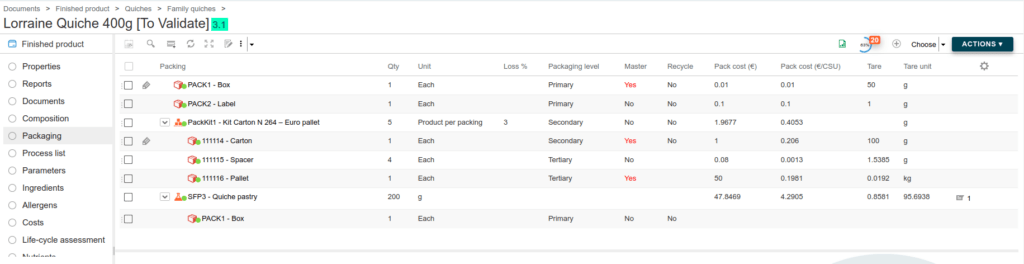
This structure enables automatic calculation of key indicators such as total packaging weight or material breakdown. Teams can quickly identify oversized components, adjust quantities, and test different configurations.
PPWR: managing hazardous substances and ensuring compliance
The PPWR is part of an increasingly strict regulatory environment regarding hazardous substances, in connection with frameworks such as REACH and the AGEC law. Companies must be able to accurately identify the presence of at-risk substances (CMR, endocrine disruptors, SVHC, etc.) and demonstrate compliance based on regulatory thresholds.
In beCPG, this management is built directly into the data model. Substances can be recorded at both raw material and packaging levels, including their hazard classification, quantity, and, where relevant, migration rates into the product. This information is automatically consolidated at the finished product level.
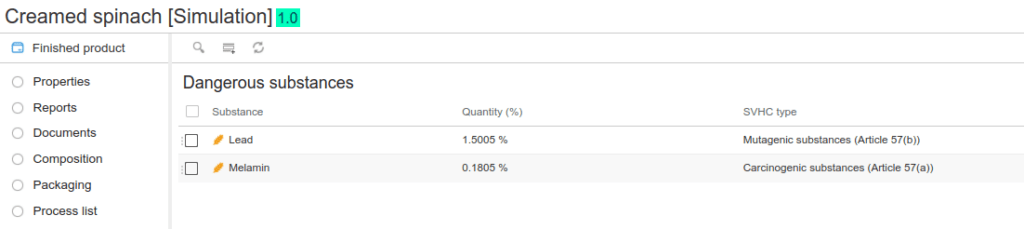
The system also automates regulatory checks. For example, it verifies whether certain substances exceed defined thresholds (such as 0.1% for SVHC) and adjusts related claims accordingly. Teams can quickly identify non-compliance issues and understand their origin (raw material or packaging).
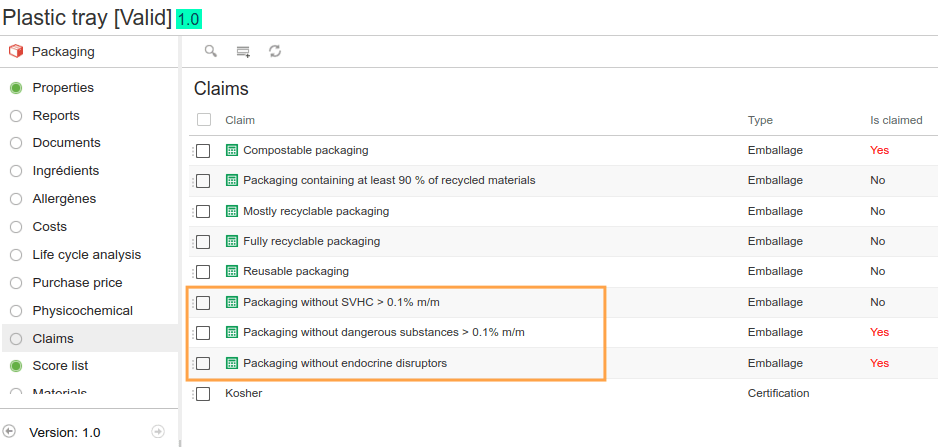
See our blog: Management of dangerous substances in beCPG.
PPWR: integrating recyclability from the design phase
The PPWR strengthens recyclability requirements. It is no longer enough to claim that packaging is recyclable, this must be demonstrated with reliable data.
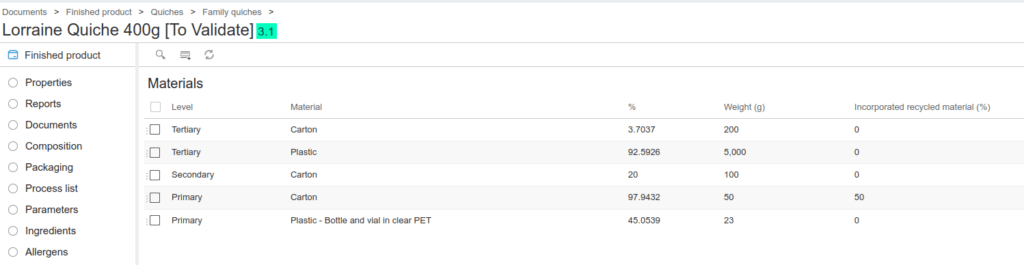
In beCPG, each packaging component is described in detail: material type, percentage breakdown, recycled content, and recyclability characteristics. This information is captured at component level and automatically calculated at the finished product level.
This structure makes it possible to reconstruct the actual composition of packaging, including multi-material structures. Teams can quickly identify elements that hinder recyclability and compare alternative options early in the design phase.
PPWR: centralizing data to generate supporting documentation
The regulation also requires companies to provide proof: packaging composition, material origin, technical characteristics, etc.
In beCPG, packaging, material, and supplier data are centralized in a single repository. Technical specifications, certifications, and environmental data are directly linked to products. This structure makes it easy to retrieve the necessary information and generate the documents expected by authorities, particularly through technical data sheets generated from system data.
It also provides a solid foundation to anticipate upcoming requirements such as the Digital Product Passport (DPP), which will rely on reliable, traceable, and accessible data.
Anticipating 2030 from today
The PPWR does not stop at 2026. It is part of a broader trajectory, with stricter requirements in the coming years, particularly regarding the use of recycled materials.
Products developed today must already take these constraints into account. This means being able to test different options, measure their impact, and secure decisions early in the process.
By structuring their data within a PLM, companies gain visibility and agility.
Are you ready for the PPWR?
✔ Your packaging data is centralized
✔ You have a clear understanding of your packaging composition
✔ You can demonstrate recyclability
✔ You control the substances used
✔ You can quickly generate supporting documentation
The beCPG PLM is a packaging management solution designed to meet the challenges of PPWR compliance and European packaging regulations. Request a demo to assess your level of readiness for the PPWR : contact us!
