PLM software for food and beverage
Formulation, labelling and multi-country compliance built in
- Recipes, packaging and specifications in a single product repository
- Nutritional values, allergens, costs and Nutri-Score calculated automatically
- Innovation projects managed from concept to launch
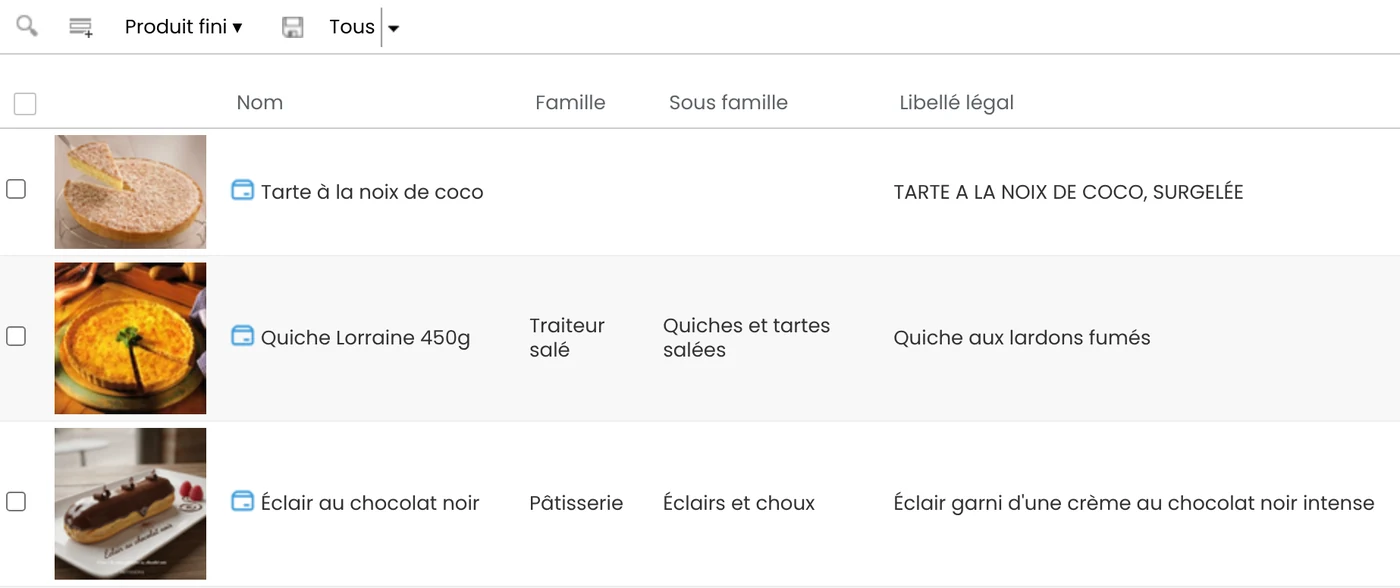 Every product classified by family and sub-family
Innovate faster, collaborate better, improve quality
beCPG is collaborative food PLM software, designed for food and beverage manufacturers. It centralises all your product data (finished and semi-finished products, raw materials, packaging, technical and regulatory characteristics) in a single repository shared by R&D, Quality, Production, Purchasing and Marketing.
Formulate your recipes, calculate labelling data automatically and generate the right specification sheet for every stakeholder, while your innovation projects move from idea to launch on the same platform. Bakery, meat and ready meals, ingredients, dairy, confectionery, beverages, food supplements: manufacturers in these sectors use beCPG to replace spreadsheets, reduce errors and bring compliant products to market faster.

Food formulation software: every value calculated from the recipe
Change a raw material, a quantity or a process loss: beCPG instantly recalculates the ingredient list, nutritional values, allergens, claims and cost of every product affected. Multi-level formulation takes into account semi-finished products, yields, process losses, overrun and moisture.
Labelling data is calculated for more than 75 countries. Nutrition tables are generated in the official formats of each market: Regulation (EU) No 1169/2011 (FIC), US FDA (vertical, tabular, linear and dual-column formats) and Health Canada, in bilingual versions, supplemented foods included. Ingredient lists are generated in several languages according to your labelling rules (QUID, allergen emphasis, groupings), and nutrition claims are checked against regulatory thresholds and tolerances.
Allergens: intentional presence and cross-contamination are managed separately, country by country. Action limits are calculated from ED05 reference doses (VITAL programme, 2024 recommendations on precautionary allergen labelling) to determine when a “may contain” precautionary statement is justified.
More than 30 nutritional and environmental scores are calculated from the same data: Nutri-Score, Health Star Rating, UK traffic lights, Latin American warning labels, Nutri-Grade, Green-Score (formerly Eco-Score), Planet-Score, Ecobalyse and many more.
Discover formulation and labelling Guide: calculating the US Nutrition Facts panel
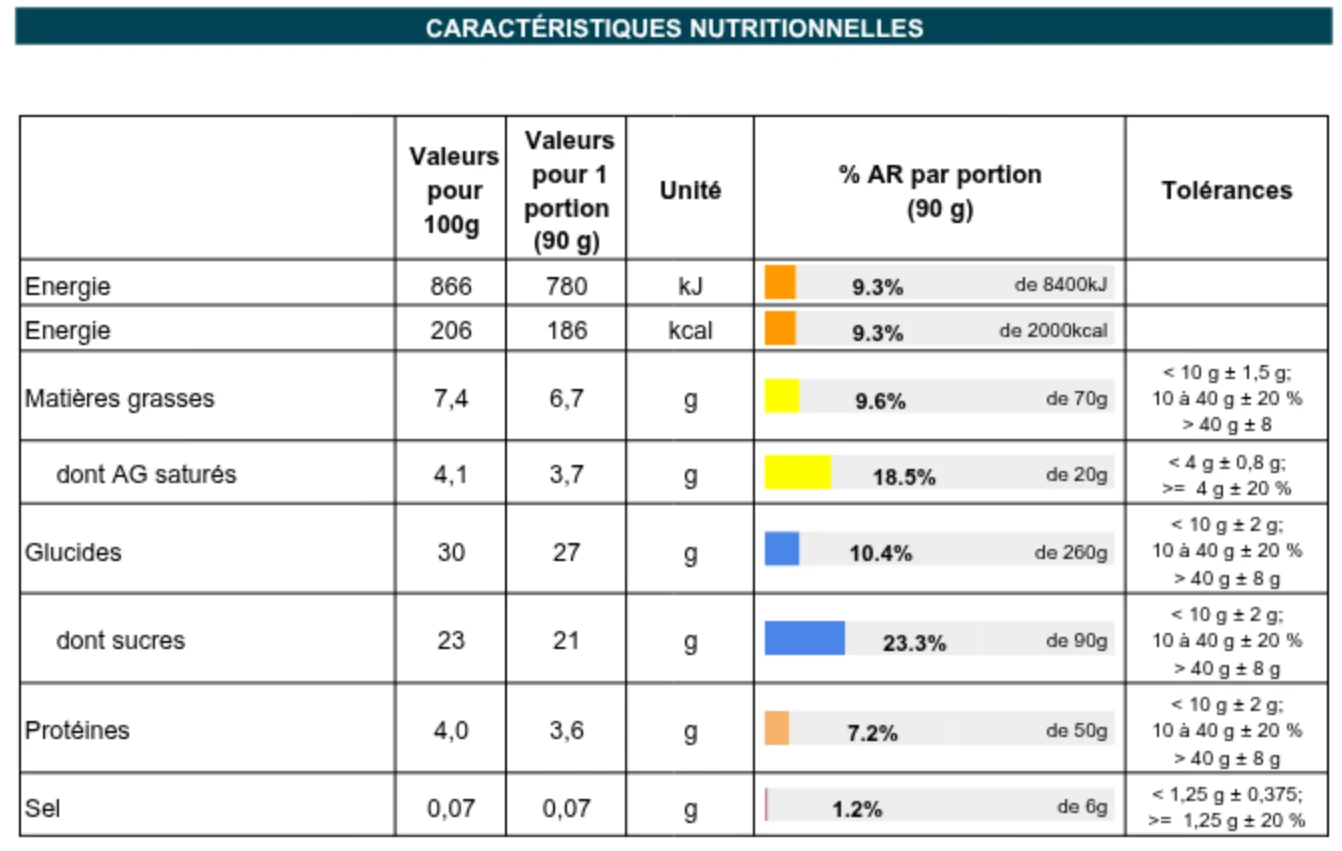 % of reference intakes per 90 g serving
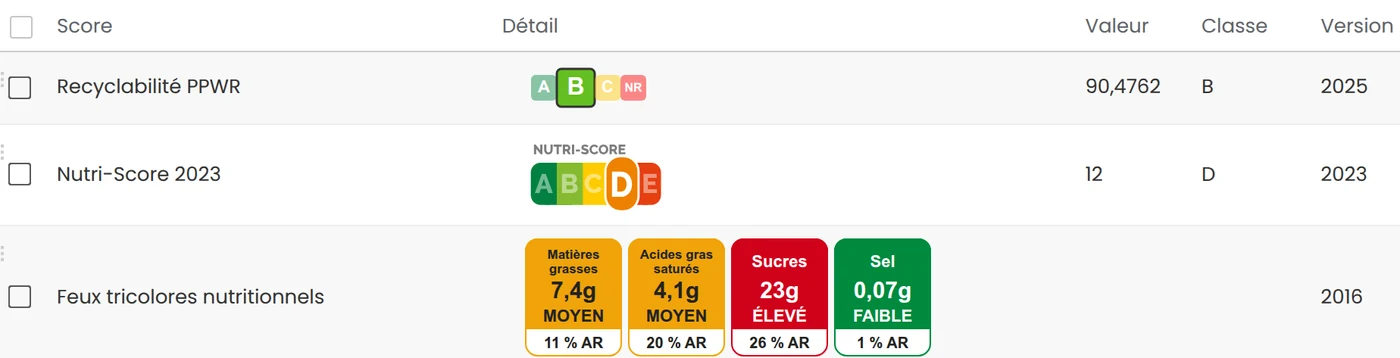 Nutri-Score 2023 calculated from the recipe
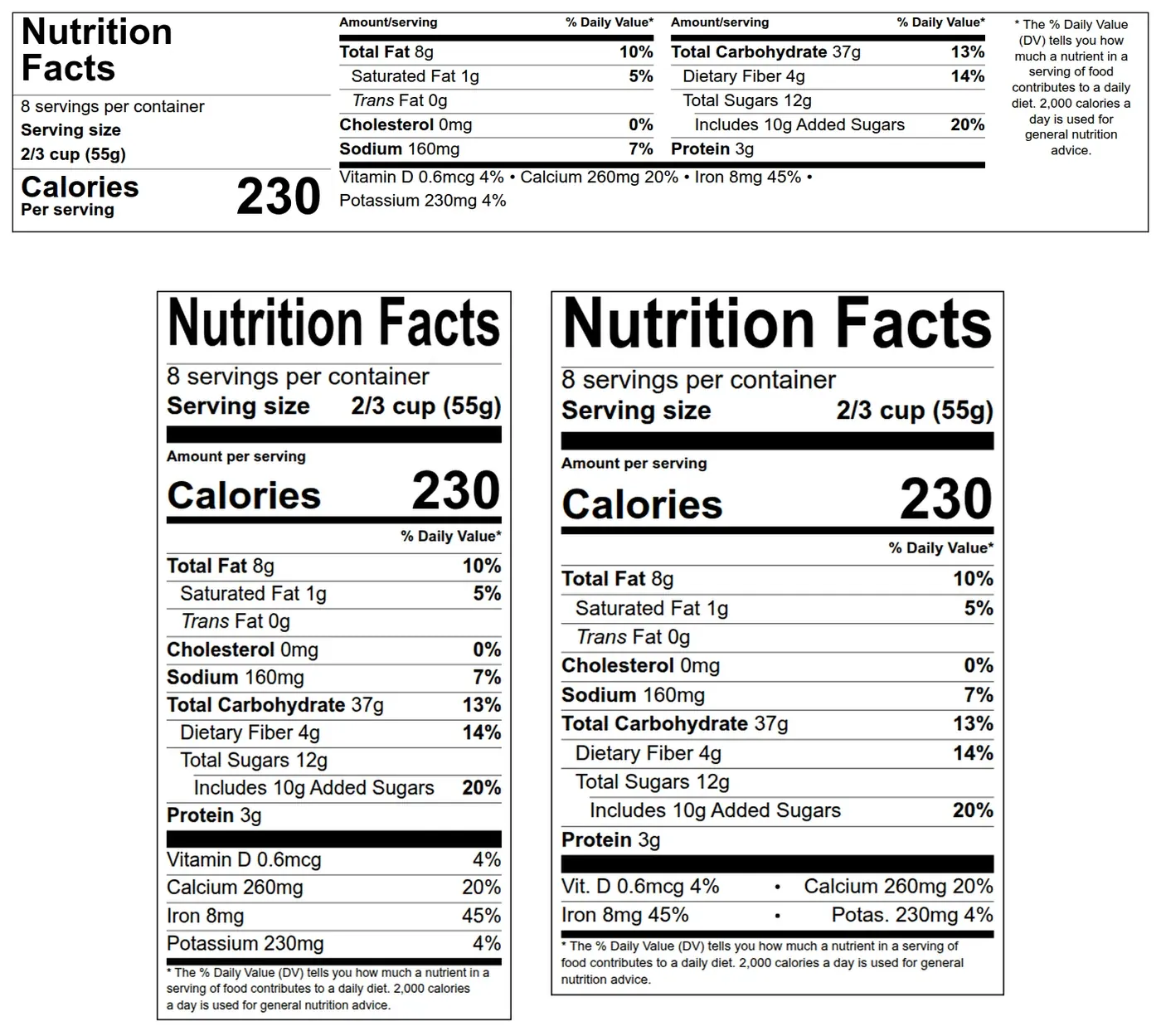 FDA tabular and vertical formats, from the same recipe
An all-in-one PLM for the food industry
A REST API and ready-to-use connectors exchange your product data with your ERP (including SAP S/4HANA), GS1 GDSN electronic catalogues and your e-commerce sites.
For your sector
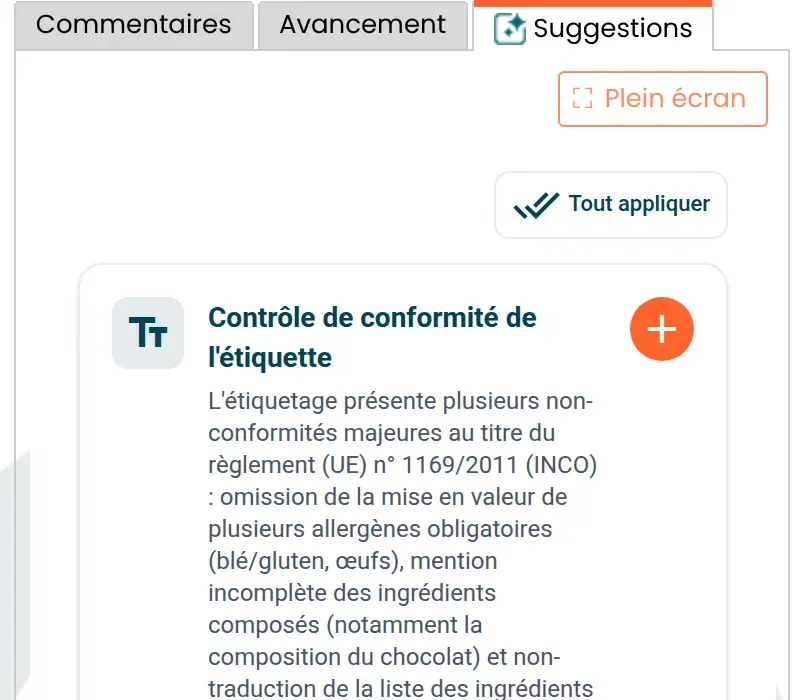 Label checked against Regulation (EU) No 1169/2011
AI suggests, your experts approve
Chef AI, beCPG’s conversational assistant, answers in natural language and in your language: it finds and compares products, displays a composition with its costs, optimises a recipe’s cost under constraints, checks compliance or lists your priority projects and tasks.
The AI module also extracts data from supplier specification sheets in PDF format to pre-fill raw materials, checks artwork proofs against the product specification sheet or the brief, translates fields and suggests marketing copy. Every suggestion is reviewed by your team before it is saved.
Regulatory calculations (ingredient list, nutritional values, allergens) are always performed by beCPG’s calculation engine, not by the AI: results are reliable, traceable and auditable.
More than 100 food, cosmetics and consumer goods companies use beCPG: bakery and pastry (Bridor, Délifrance, Poppies Bakery, Mademoiselle Desserts), meat and ready meals (SVA Jean Rozé, Jean Floc’h, Cuisine Solutions, Mix Buffet, Daunat), ingredients (Diana Food, Lallemand, Limagrain Ingredients, Biospringer), dairy and ice cream (Silver Pail Dairy, Les Délices du Valplessis), confectionery and beverages (Valrhona, Chocmod, Spadel, Marie Brizard Wine & Spirits), food supplements (Havea, Nutrisens, SuperDiet) and food service (Newrest, Explora Journeys).
They trust beCPGSee all our customer references








What is food PLM software?
Food PLM (Product Lifecycle Management) software centralises everything that defines a product, from idea to end of life: recipes, raw materials, packaging, specifications, regulatory data, documents and development projects. R&D, Quality, Purchasing, Production and Marketing work on the same data instead of exchanging spreadsheets.
What is the difference between PLM and ERP?
ERP manages orders, inventory, production and finance for existing items. PLM manages the definition of the product: formulation, specifications, labelling and compliance, before launch and throughout the product’s life. beCPG sends approved product data to your ERP through its REST API or a dedicated SAP connector (S/4HANA, OData or IDoc).
Can beCPG replace Excel for recipe management?
Yes. Recipes, costs, nutritional values and allergens are calculated from a single data set. When a raw material changes, a change order lists every product affected, simulates the impact on cost or nutritional values, then applies the change and versions the products once approved: no more updating dozens of files by hand.
Which food regulations does beCPG cover?
Nutrition tables are generated for Europe under Regulation (EU) No 1169/2011 (FIC), for the United States (FDA) and for Canada (Health Canada, in a bilingual version). Nutritional values, ingredient list, allergens and nutrition claims are calculated for more than 75 countries, including the European Union, the United Kingdom, the United States, Canada, Australia, New Zealand, China, Japan and the Gulf countries. Food additives are checked against Regulation (EC) No 1333/2008 with the beCPG regulatory database, whose coverage is extended regularly. Front-of-pack nutritional scores and environmental scores are calculated as standard: Nutri-Score, Health Star Rating, UK traffic lights, Latin American warning labels, Green-Score and many more.
How does beCPG handle precautionary allergen labelling?
beCPG distinguishes intentionally present allergens from those that may be present through cross-contamination. For each allergen, action limits are calculated from ED05 reference doses, in line with the VITAL programme and the 2024 recommendations on precautionary allergen labelling: the “may contain” statement is only used when the risk justifies it.
Is beCPG available in the cloud?
Yes. beCPG is available in the cloud (SaaS). You can request a demo from our team or try it free for 30 days.
See beCPG in action
Book a demo with a food PLM expert or start your free trial today.