An open PLM platform that fits your information system
beCPG is built on robust, proven and interoperable open source technologies. It adapts to your constraints and integrates with your information system: ERP, GS1 data pools, PIM, e-commerce and AI assistants.
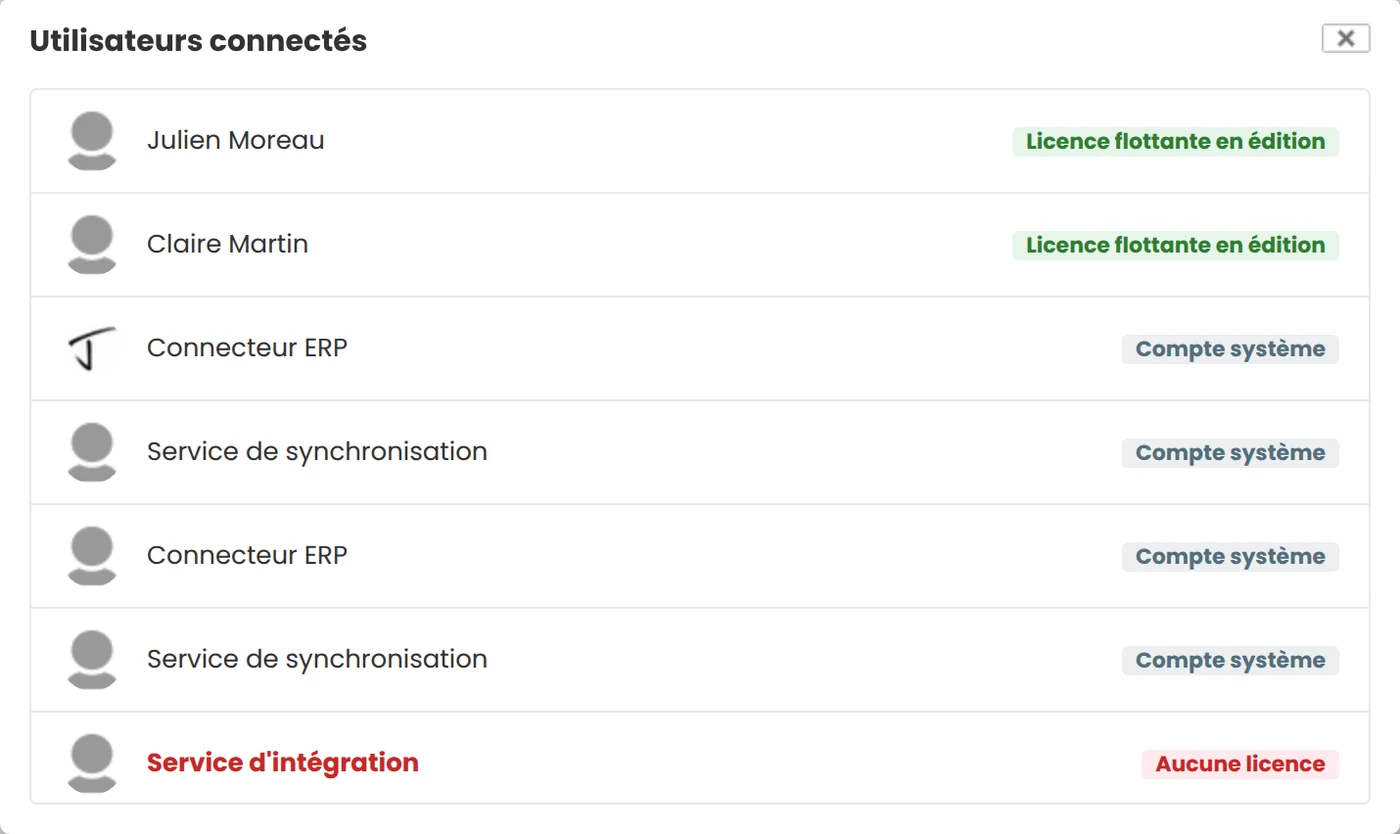 ERP connector and synchronization connected as system accounts
Cost, simplicity and openness
Cost
A minimal investment compared with other PLM solutions
Simplicity
Integrated technologies and fast deployment: your teams focus on their business, not on integration
Openness
Open standards and formats that keep you independent of proprietary solutions and ensure the long-term durability of your data
A state-of-the-art platform
beCPG runs on a modern, standards-based platform: Java, Alfresco, open APIs and containers.
A state-of-the-art platform
- Java 21, Spring
- Alfresco (content management)
- Solr (search)
- SOA architecture, REST API
- Docker / Kubernetes
- Activiti (workflow and BPM)
A rich and powerful solution
For IT departments, beCPG is a comprehensive, ready-to-use and highly configurable PLM, at a competitive price.
It is built on Alfresco, the open source content management platform developed by Hyland and used by more than 3,000 organizations in 180 countries. Alfresco is rated a Leader and a Strong Performer by Forrester. Alfresco has been named several times in the Gartner® Magic Quadrant, and Hyland is named in it today.
Every release is qualified in two stages, first by our quality assurance team and then by pilot customers, before it is deployed to production for the first time.
Gartner does not endorse any company, vendor, product or service depicted in its publications, and does not advise technology users to select only those vendors with the highest ratings or other designation. Gartner publications consist of the opinions of Gartner’s business and technology insights organization and should not be construed as statements of fact. Gartner disclaims all warranties, expressed or implied, with respect to this publication, including any warranties of merchantability or fitness for a particular purpose. GARTNER is a trademark of Gartner, Inc. and/or its affiliates.
Data exchange and connectors
- REST API to import and export any entity in JSON, run formulation, generate documents and view version history (documentation)
- Bulk import of products, formulas, packaging, suppliers and documents from Excel or CSV templates
- SAP connector: materials, bills of materials and routings to SAP S/4HANA (OData or IDoc)
- GS1 GDSN connector: GS1-standard XML files sent automatically to data pools such as Equadis, 1WorldSync, Synkka, Validoo or Atrify
- Publication channels: automated exports to your ERP, your PIM or GS1 data pools, filtered on business criteria (product type, status, target market), with resynchronization and a detailed log of successes and failures
- Salsify, Decernis and a configurable CSV connector that exports structured data together with its documents
- Data exchange with other ERPs (Sage, Microsoft Dynamics, Odoo, Oracle…), CRMs, labeling software and e-commerce sites
- MCP server so that AI assistants such as Claude, Cursor or VS Code can use beCPG tools
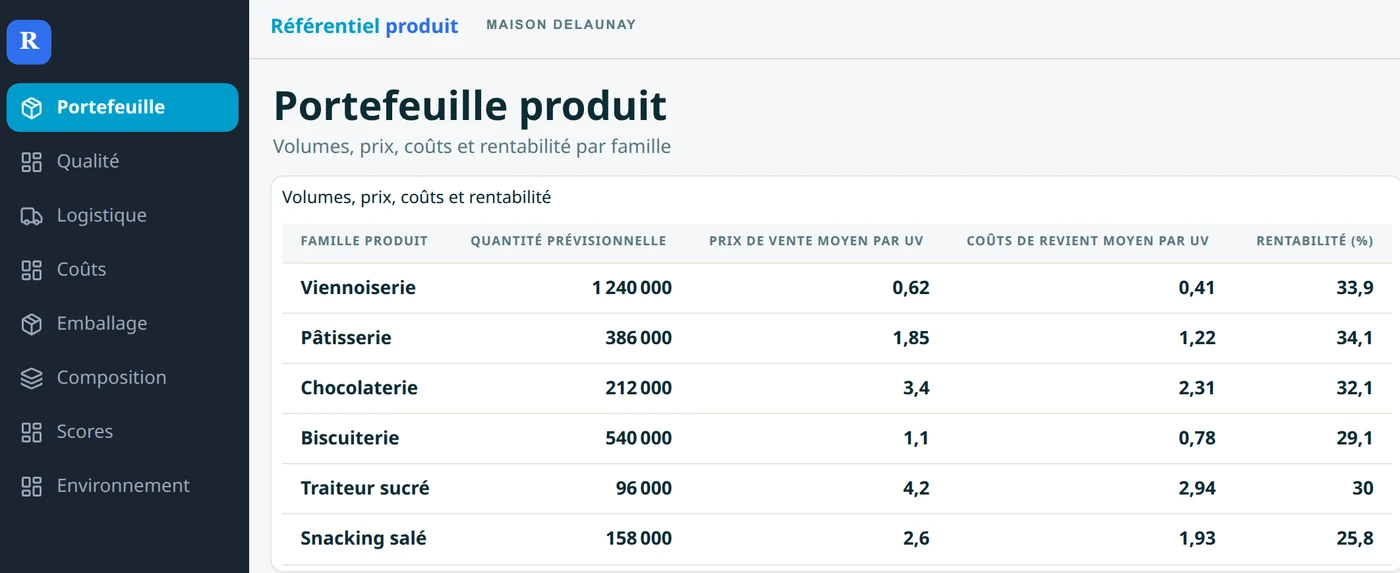
Real-time synchronization
beCPG is the system of record for product data. As soon as a product is validated, modified or archived, the change is made available to your ERP, labeling software, MES, LIMS, e-commerce site and GS1 data pools, either directly or through your ESB or ETL.
Docker and Kubernetes
The clustered architecture runs each service on separate machines and makes critical services redundant, for high availability and scalability.
beCPG is built on a microservices architecture: each block in the diagram below is a Docker container.
Cloud or on-premise
- SaaS on Google Cloud, hosted in Europe or the United States
- A dedicated environment for each customer, with separate test and production environments
- On-premise installation also possible, with Docker or Kubernetes
Security and trust
- Information security management system aligned with ISO 27001; GDPR compliance
- Data encrypted in transit and at rest
- Single sign-on (SAML 2.0) and multi-factor authentication, as options
- Daily backups stored off-site; recovery plans tested every year
- 99.5% monthly availability, excluding scheduled maintenance
- Regular security audits by Vaadata, including penetration testing
Security audited by Vaadata (April 2026). Security documentation available on request.
How does beCPG integrate with our ERP?
Through the REST API (import and export of any entity in JSON, formulation, document generation, version history) or through a dedicated connector, either directly or via your ESB or ETL. The SAP connector exports materials, bills of materials and routings to SAP S/4HANA in OData or IDoc format. All exchanges go over HTTPS and enforce the permissions of the calling user.
Which connectors are available?
SAP, GS1 GDSN (for data pools such as Equadis, 1WorldSync, Synkka, Validoo or Atrify), Salsify, Decernis for regulatory data, a configurable CSV connector and an OLAP connector for business intelligence. Each connector is linked to a publication channel that selects the products to send and logs every exchange.
Can AI assistants use beCPG data?
Yes. Chef AI is built into the interface; the same beCPG tools are also available to external AI assistants such as Claude, Cursor or VS Code, through an MCP (Model Context Protocol) server.
Is beCPG available in the cloud?
Yes, as SaaS, hosted on Google Cloud in Europe or the United States, with 99.5% monthly availability. It can also be installed on your own infrastructure.
How is the SaaS secured?
beCPG applies an information security management system aligned with ISO 27001, on certified Google Cloud infrastructure. Data is encrypted in transit and at rest; backups are made daily and stored off-site. The platform is regularly audited by Vaadata. Our security documentation is available on request.
Which languages does beCPG support?
As many as you need. Product data, ingredient lists, labeling and specification sheets can be managed in any language and regional variant, for example en_US, en_AU, zh_CN or ar, and documents are generated in the language of each market.
How are permissions managed?
Permissions are defined by collaborative site, content, action, field and report, with roles (consumer, contributor, collaborator, manager) assigned to users and groups.
See beCPG in action
Talk to our technical team or start your free trial today.