PLM software for cosmetics and personal care
Formulas, INCI lists and regulatory compliance on a single platform
- Raw materials, fragrances and packaging in a single product repository
- Product information file, specification sheets and claims generated automatically
- Innovation projects managed from brief to launch
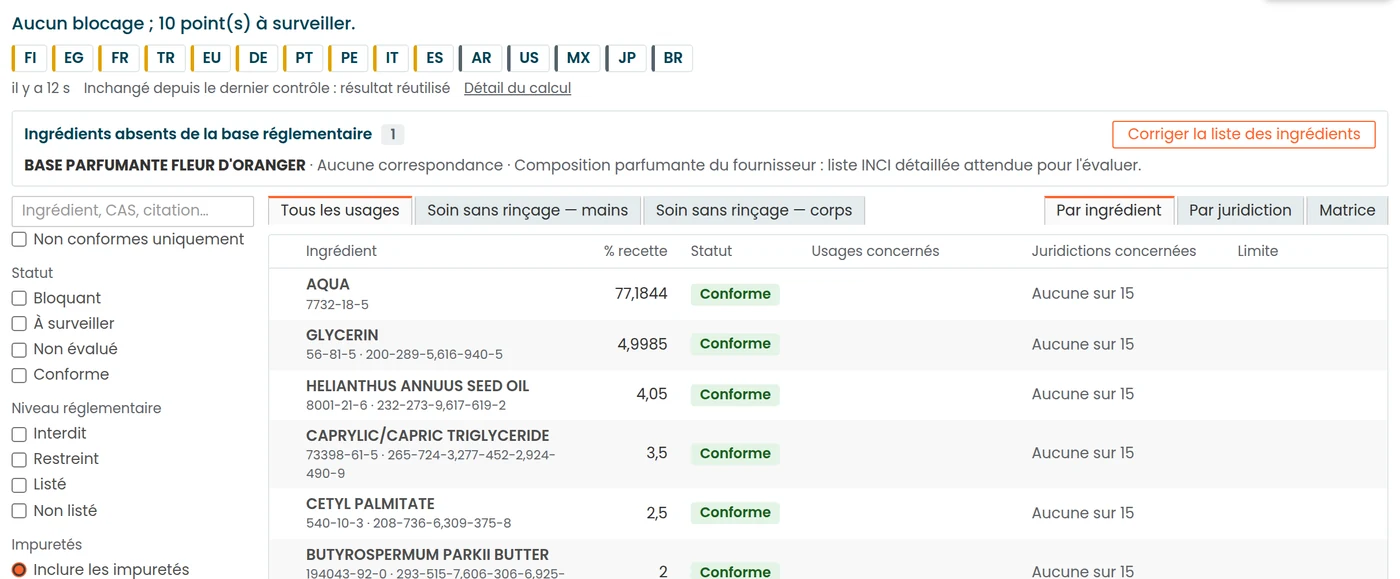 No blockers, 10 points to watch across 15 jurisdictions
Innovate faster, secure compliance, collaborate better
beCPG is collaborative cosmetic PLM software, designed for manufacturers of cosmetics and personal care and household products. It centralises your formulas, raw materials, fragrances, packaging and regulatory data in a single repository shared by R&D, Regulatory Affairs, Quality, Purchasing, Production and Marketing.
Formulate your products, calculate the INCI list, toxicology and claims automatically, check compliance country by country and generate the product information file (PIF), while your innovation projects move from brief to launch on the same platform. Brands, contract manufacturers and private-label manufacturers use beCPG to replace spreadsheets, reduce errors and launch compliant products faster.
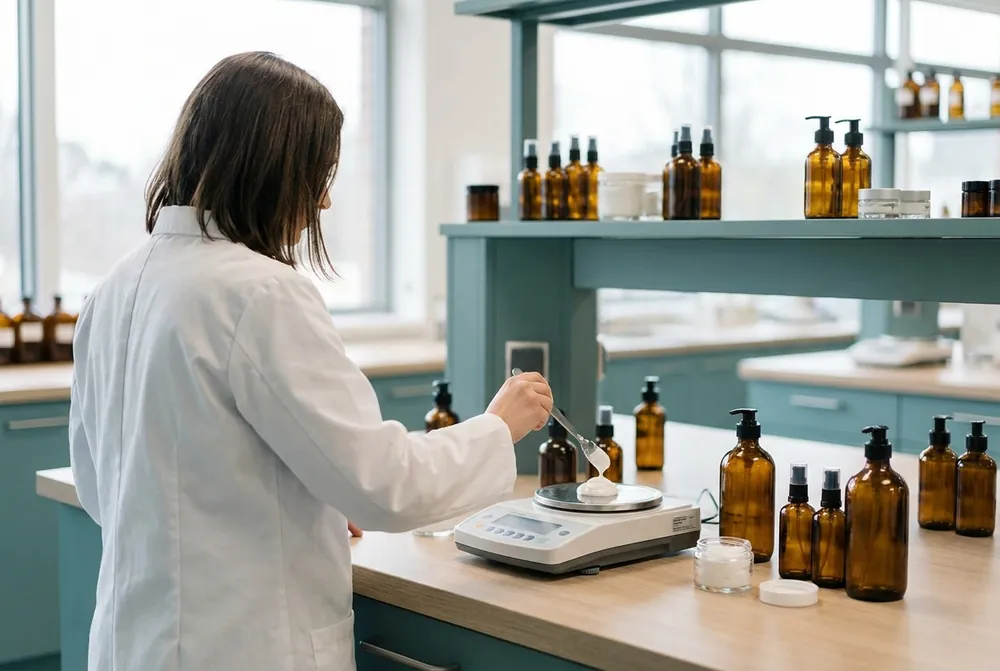
Cosmetic formulation software: every value calculated from the formula
Change a raw material or a percentage: beCPG instantly recalculates the INCI list, regulatory compliance, toxicology, claims and cost of every product affected. Simulate formula changes without touching your approved products and compare your trials side by side.
Regulatory compliance is checked by country and by usage with the beCPG regulatory database, which covers 13 zones and more than 40 countries, nearly 94% of the global market: Regulation (EC) No 1223/2009 and the CosIng annexes, United Kingdom, United States, Canada (Cosmetic Ingredient Hotlist), China, Japan, South Korea, Brazil, Australia, the Gulf countries and ASEAN. For each ingredient, you see its status, limits, precautions for use and regulatory reference. The database coverage is extended regularly.
Toxicology is calculated from the ingredients and the product’s usage. Fragrances are checked against IFRA standards, fragrance allergens are declared above labelling thresholds, and the CLP classification of the formula is calculated, along with SVHC substances.
Sustainability indicators are calculated from the same data: Green Impact Index, packaging recyclability under the PPWR, life cycle assessment (PEF method).
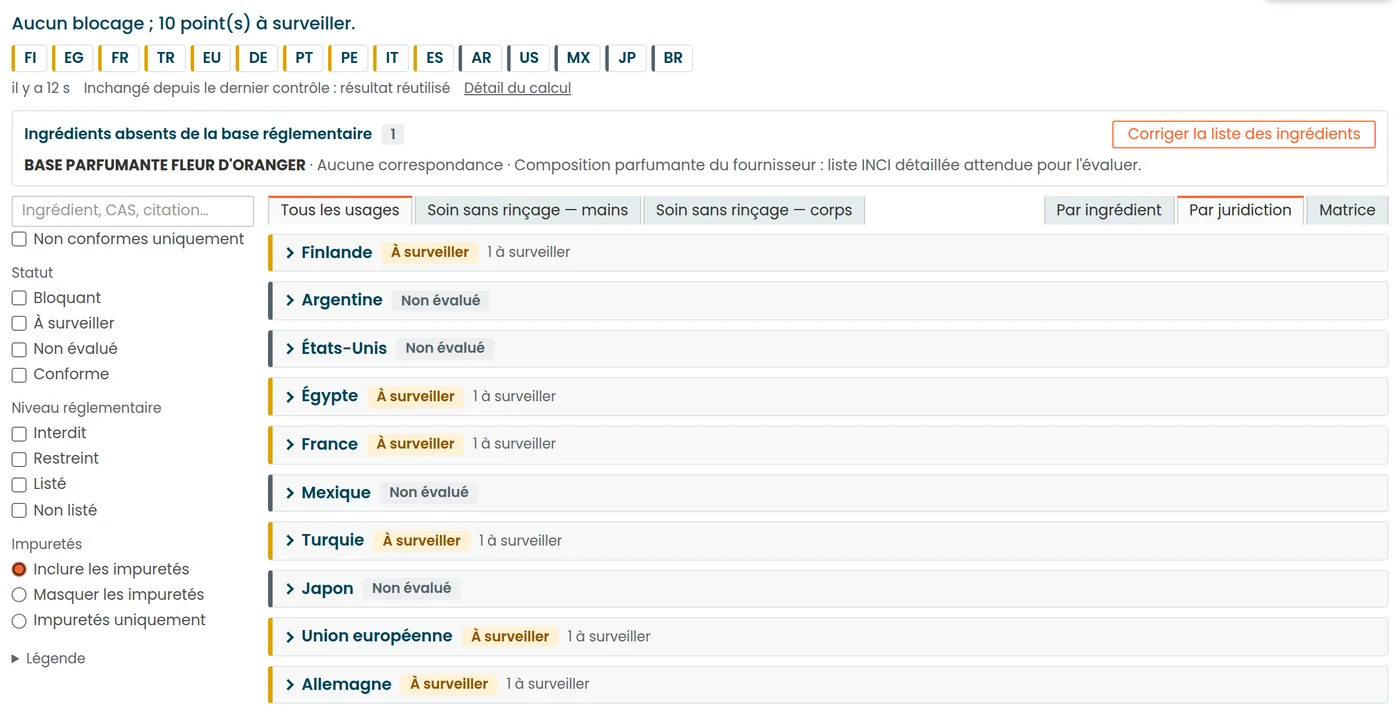 One status per jurisdiction: to watch or not assessed
 Percentage of each raw material
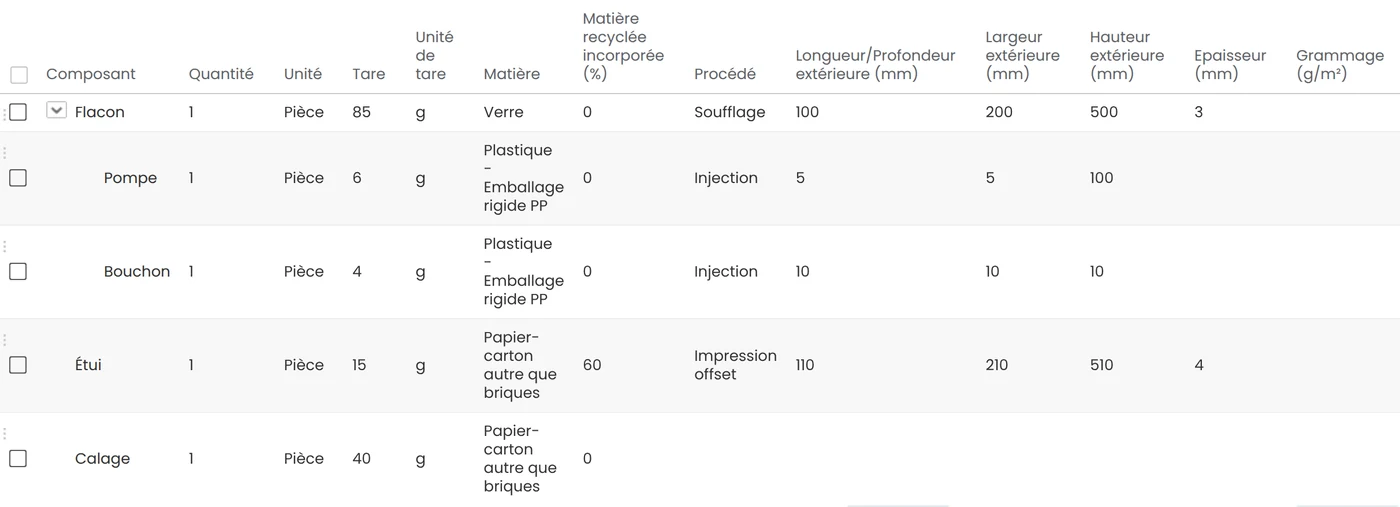 Recycled content, component by component
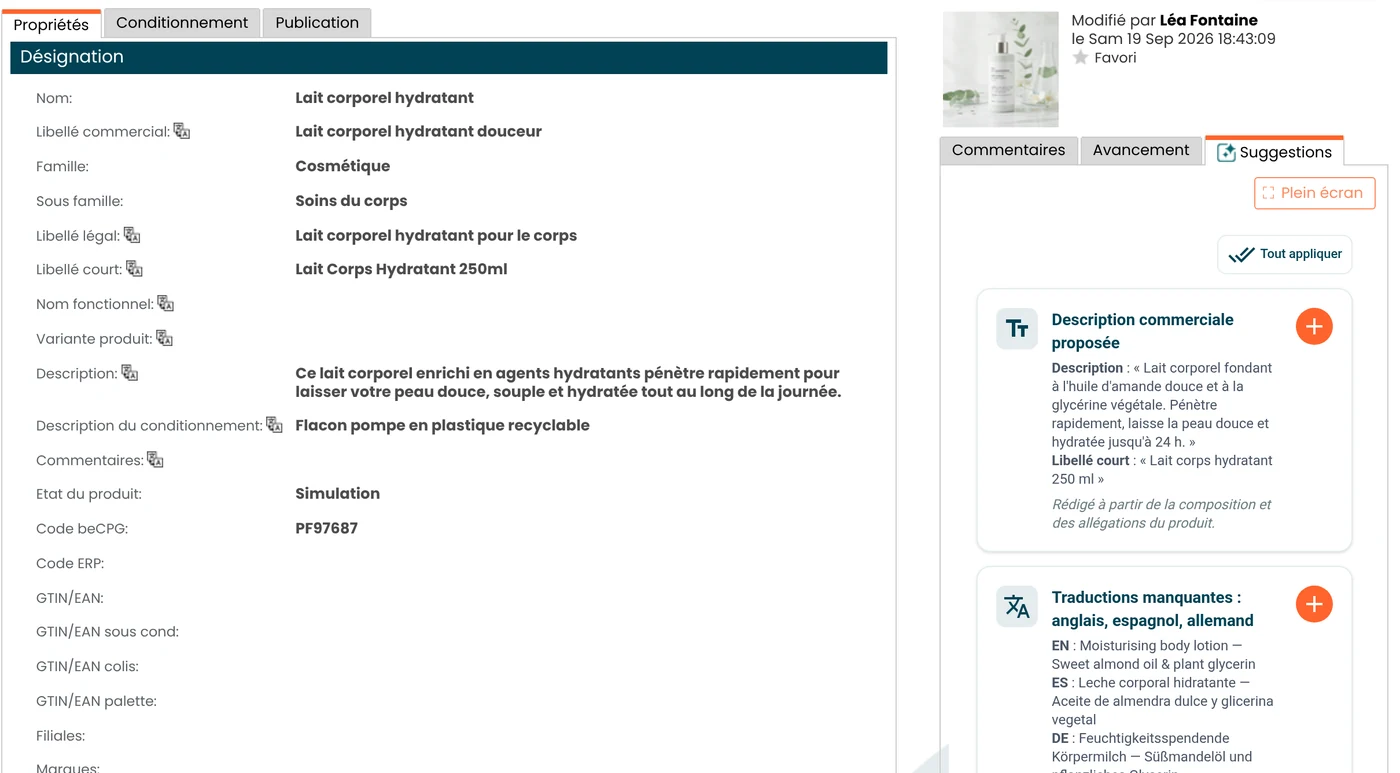 Commercial description suggested from the composition
An all-in-one PLM for cosmetics and personal care
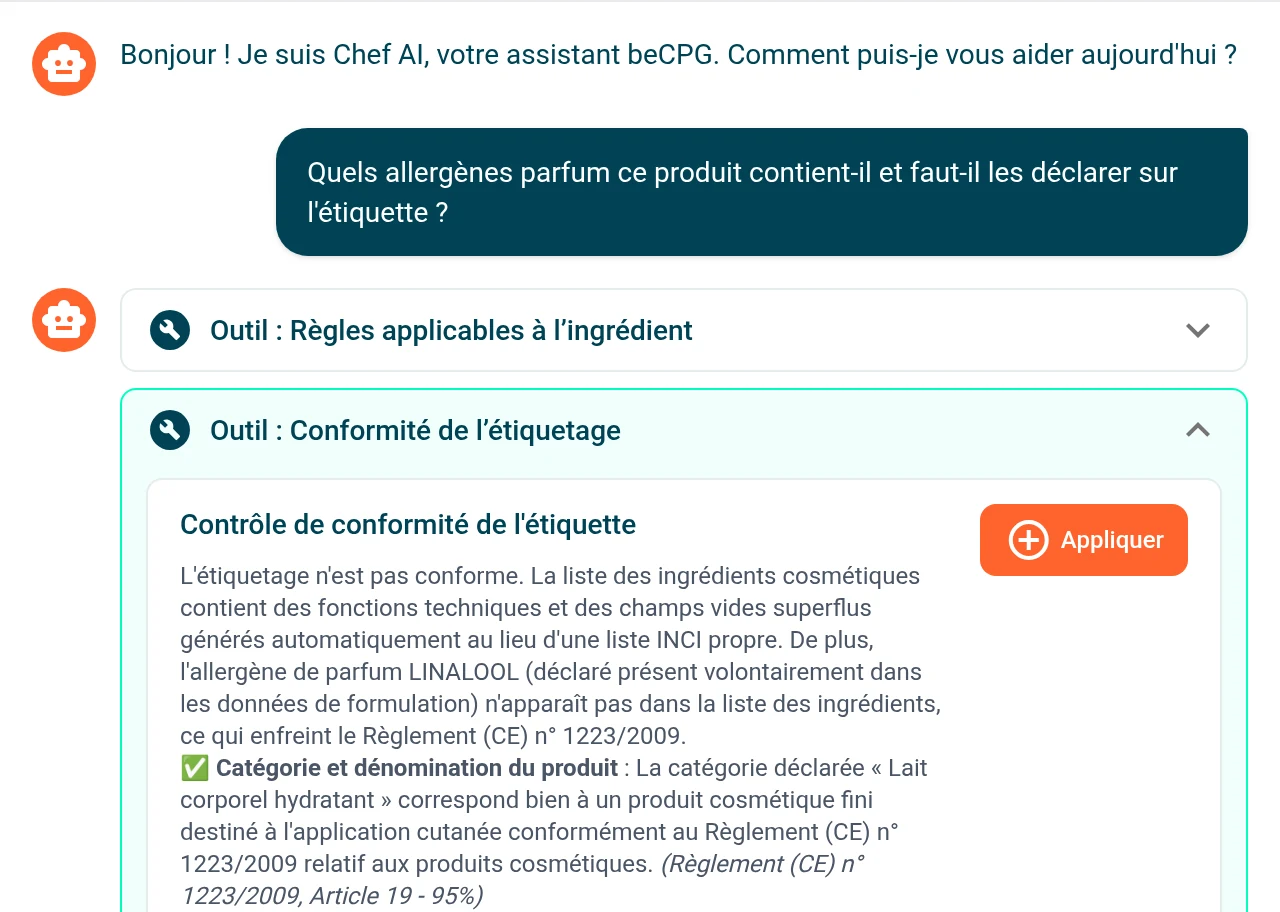 Undeclared fragrance allergen: label non-compliant
AI suggests, your experts approve
Chef AI, beCPG’s conversational assistant, answers in natural language and in your language questions such as: which fragrance allergens does a product contain, and must they be declared? How does one formula compare with another? Which projects and tasks are running late?
The AI module also reads supplier specification sheets and certificates to pre-fill raw materials, checks artwork proofs against product data, translates fields and suggests marketing copy. Every suggestion is reviewed by your team before it is saved.
Regulatory calculations (INCI list, compliance, toxicology) are always performed by beCPG’s calculation engine, not by the AI: results are reliable, traceable and auditable.
Cosmetics, personal care and healthcare companies use beCPG: beauty groups (Groupe Rocher, L’Occitane en Provence, Stanhome, Sanoflore), brands (Panier des Sens, McPherson’s, Havea), contract and private-label manufacturers (Coslab, Amelia Knight), fragrances (Muller & Koster) and health and hygiene (Boiron, Juva Santé, Ontex, Celluloses de Brocéliande).
They trust beCPGSee all our customer references









What is cosmetic PLM software?
Cosmetic PLM (Product Lifecycle Management) software centralises everything that defines a product, from brief to end of life: formulas, raw materials, fragrances, packaging, regulatory data, documents and development projects. R&D, Regulatory Affairs, Quality, Purchasing and Marketing work on the same data instead of exchanging spreadsheets.
Which cosmetic regulations does beCPG cover?
The beCPG regulatory database checks banned and restricted ingredients, by country and by usage, in 13 zones and more than 40 countries, nearly 94% of the global market: European Union (Regulation (EC) No 1223/2009 and the CosIng annexes), United Kingdom, United States, Canada (Cosmetic Ingredient Hotlist), China (NMPA), Japan, South Korea, Taiwan, Brazil (ANVISA), Mexico, Australia and New Zealand, the Eurasian Economic Union, the Gulf countries (GSO 1113) and ASEAN, as well as IFRA standards. Its coverage is extended regularly and other regulations can be added on request.
Can beCPG generate the product information file (PIF)?
Yes. The PIF report gathers the product file data, with the quantitative and qualitative formula, from data already in beCPG: formula, INCI list, toxicology, raw material documents and stability tests.
Does beCPG handle fragrances and IFRA standards?
Yes. beCPG takes IFRA standards into account and shows the maximum percentage of each raw material by product category, with an IFRA report. Fragrance allergens are calculated from the composition and declared when they exceed labelling thresholds.
Can cosmetics, food supplements and biocides be managed in the same PLM?
Yes. beCPG manages cosmetics, hygiene products, food supplements, biocides and food products on the same platform, each with its own data model, rules and documents. Healthcare and hygiene groups use it for several product categories.
Is beCPG available in the cloud?
Yes. beCPG is available in the cloud (SaaS) or can be installed on your own infrastructure. You can request a demo or try it free for 30 days.
See beCPG in action
Book a demo with a cosmetic PLM expert or start your free trial today.