How to handle customer complaints in food and cosmetics
Updated October 2026.
A customer complaint is a cost, but also the best source of information on your products. Handled well, it protects consumers, answers the customer quickly and prevents the same problem from coming back. Here is a method in seven steps for food and cosmetics manufacturers.
1. Record every complaint the same way
Whatever the channel (retailer, consumer service, sales representative), record:
- the product, the batch or lot number and the date (best-before date or manufacturing date);
- the description, photos, emails and whether a sample is available;
- the customer and the quantity concerned;
- a category: foreign body, allergen, microbiological, quality, packaging, labeling, service.
2. Triage: is there a safety risk?
Some complaints cannot wait: a foreign body, an undeclared allergen, a suspected contamination, a serious reaction to a cosmetic. Escalate them at once to the person responsible for withdrawals and recalls. In the European Union, food business operators must inform the authorities when a food they placed on the market may be unsafe (Article 19 of Regulation (EC) No 178/2002), and the responsible person of a cosmetic must notify serious undesirable effects (Article 23 of Regulation (EC) No 1223/2009).
3. Investigate with the product data
Link the complaint to the finished product and to its recipe, raw materials, packaging, suppliers and production site. Look for the root cause with a structured method (5 whys, Ishikawa diagram, 8D) rather than stopping at the first explanation.
4. Define corrective and preventive actions
Each action has an owner, a deadline and an effectiveness check: an action closed without checking that the problem has stopped is not finished.
5. Involve the supplier when the cause is upstream
If the cause is a raw material or a packaging, open a supplier non-conformity, ask for the supplier’s analysis and corrective action, and follow it to the end.
6. Answer the customer
Answer with the findings and the actions taken, within the time agreed with the customer. A complete answer, given quickly, often matters as much to a retailer as the product itself.
7. Analyze the trends
| Indicator | Why |
|---|---|
| Complaints per product and per million units sold | Compare products of different volumes |
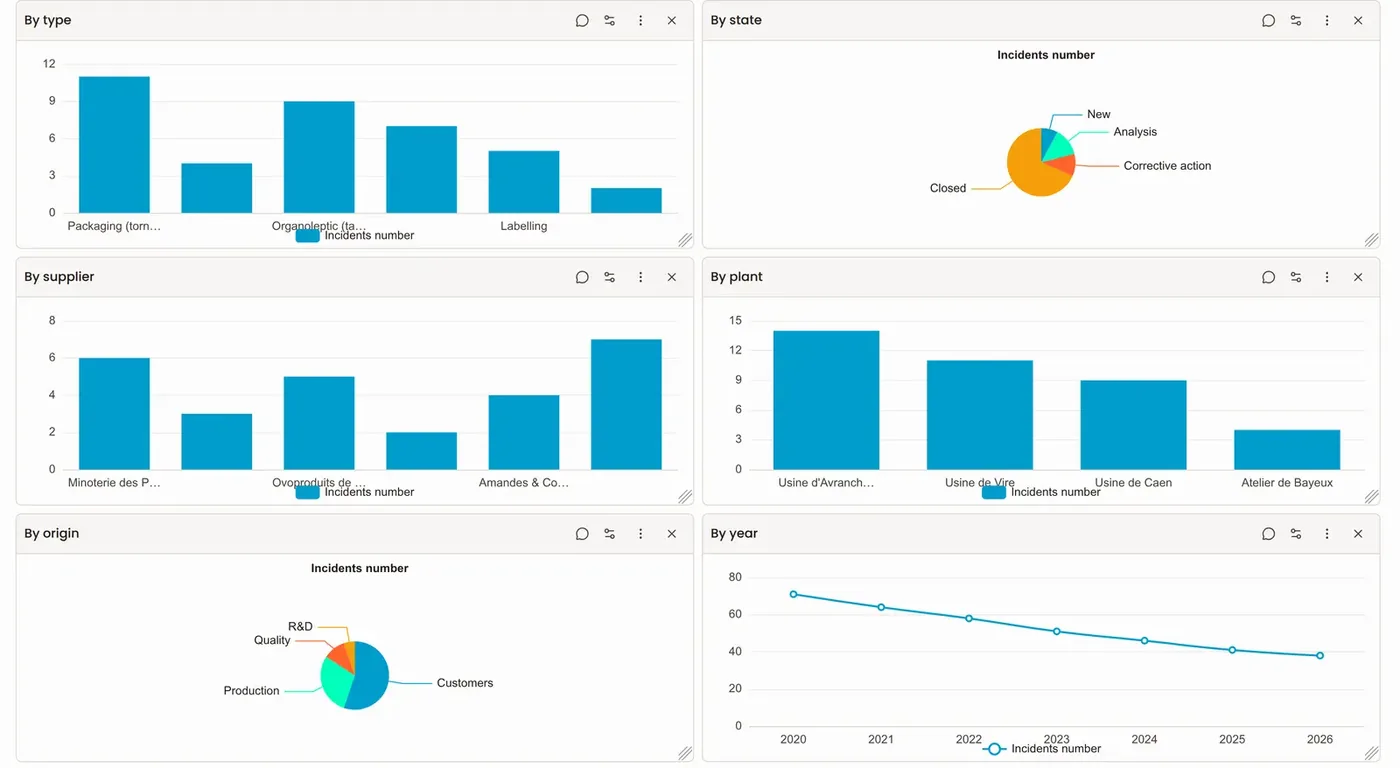
| Complaints by cause | Find the processes to improve |
| Complaints by supplier, customer or site | Target audits and supplier reviews |
| Recurrence after action | Check that corrective actions work |
Mistakes to avoid
- Complaints kept in an email inbox: no history, no trends.
- No link to the product data: the investigation starts from scratch every time.
- Corrective actions without an effectiveness check.
In beCPG
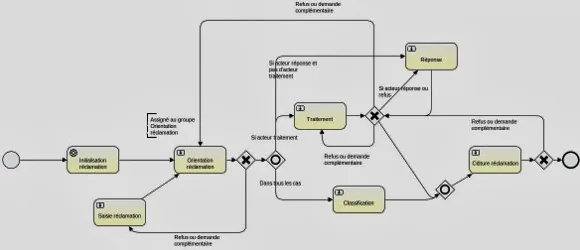
Customer complaints and supplier non-conformities are processed in workflows, with their documents (photos, emails), and linked to the finished products, raw materials and packaging concerned, with their recipe, specifications and suppliers. The supplier can answer a non-conformity through the supplier portal, corrective and preventive actions are followed to closure, and dashboards analyze complaints by product, supplier or customer. Discover quality management in beCPG PLM.