How to run a sourcing project for raw materials and packaging
Updated October 2026.
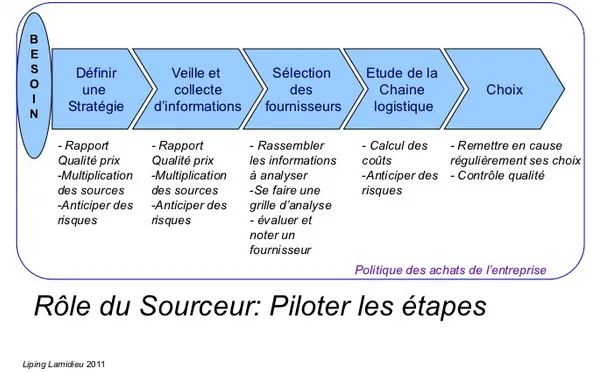
A new product often needs a new raw material, a new packaging or a subcontracted product. Sourcing it well means finding the right price, the right quality and a reliable supply, and getting complete data before the product is launched. Here is a method in eight steps.
1. Write the specification
Everything starts with what you expect from the supplier. A good specification covers:
- composition requirements, allergens (including cross-contact), origins and claims (organic, vegan, GMO-free…);
- physico-chemical and microbiological criteria, shelf life, and for cosmetics the INCI composition and restricted substances;
- packaging, palletization and logistics constraints;
- target price and volumes;
- the documents expected: technical data sheet, certificates, allergen and GMO statements, questionnaires.
2. Pre-select the suppliers
Start from the suppliers you already know: approval status, valid certificates (for example IFS, BRCGS, FSSC 22000, or ISO 22716 for cosmetics), audit results and past non-conformities. Add new suppliers only if the known ones cannot answer.
3. Send the same request to every supplier
Send the specification and the same questionnaire to all suppliers consulted. Answers in the same format can be compared; answers in five different PDF layouts cannot.
4. Collect the technical data, not only the price
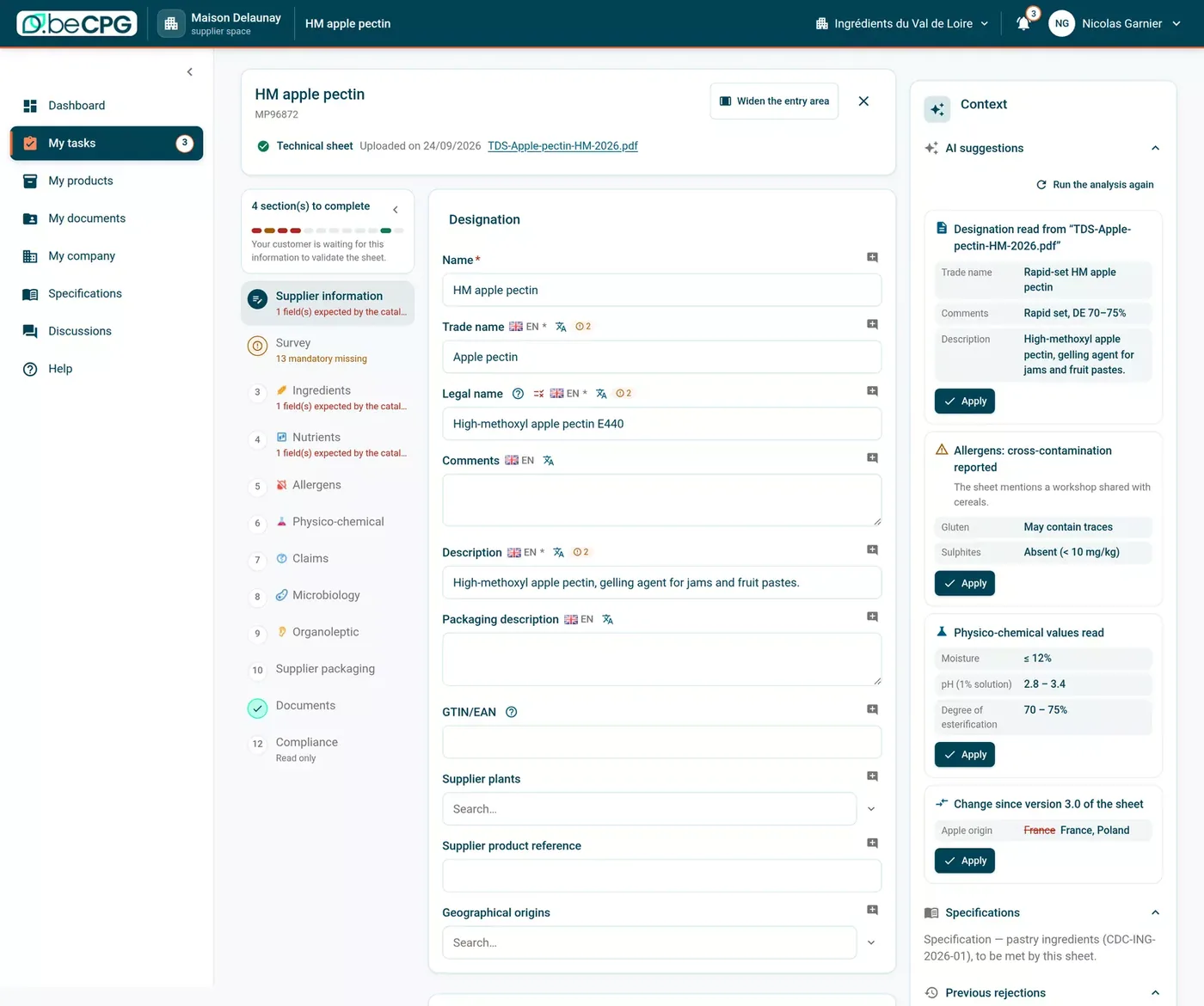
Ask each supplier for the composition, the allergens, the nutritional or physico-chemical values and the documents with their validity dates. The best way is to let suppliers enter their data themselves, instead of retyping their technical data sheets.
5. Compare the offers
| Criterion | What to look at |
|---|---|
| Compliance | Does the material meet the specification: forbidden ingredients, limits, claims? |
| Data | Is the data complete, with valid documents? |
| Cost | Price, but also its effect on the cost of the finished products |
| Risk | Origin, single source, capacity, past non-conformities |
| Lead time | Can the supplier deliver for the launch date? |
6. Test the samples
Laboratory analyses, trials in the recipe, tasting or sensory tests, and for cosmetics stability and compatibility tests. Record the results against the specification criteria.
7. Approve and reference
Approve the supplier and the raw material, create the raw material in the product repository with its validated data, and reference an alternative supplier where the risk justifies it.
8. Follow up after the launch
- renew documents before they expire;
- record supplier non-conformities and their corrective actions;
- review each supplier at least once a year, with a questionnaire if needed.
Mistakes to avoid
- Retyping supplier PDF files: errors and lost time at every update.
- Documents without an expiry date: an out-of-date certificate is found during an audit.
- Choosing on price alone: a cheaper material can change the allergens or the nutrition of every product that uses it.
In beCPG
Sourcing projects run on project templates. In the supplier portal, suppliers fill in their data, answer questionnaires and upload their documents with validity dates; AI reads the technical data sheet and proposes the values with a confidence level, and the supplier applies them. Specifications flag what does not comply, and non-conformities are linked to the supplier. Discover the beCPG supplier portal. See also: a supplier portal for the sourcing of raw materials.