Brazil nutrition labeling: how to calculate ANVISA’s front-of-pack magnifier and new table
Since October 9, 2022, ANVISA’s RDC 429/2020 and IN 75/2020 have governed nutrition labeling for packaged foods sold in Brazil. A front-of-pack magnifier reading “ALTO EM” (high in) flags high levels of added sugars, saturated fat or sodium, and the nutrition table has a new format. The rules apply to imported products too, labeled in Portuguese.
ANVISA, Brazil’s Health Regulatory Agency, wants consumers to understand the nutritional value of what they buy. It targets the nutrients whose excess intake is a public health concern. For a US or international exporter, the practical question is how to calculate these values from the recipe rather than at the artwork stage.
Timeline and compliance deadlines
RDC 429/2020 and IN 75/2020 were published on October 8, 2020. They took effect on October 9, 2022, 24 months after publication. ANVISA granted compliance periods by product type:
- products already on the market on October 9, 2022: 12 months, until October 2023;
- products from family farming and micro-entrepreneurs: 24 months after the effective date;
- non-alcoholic beverages in returnable packaging: 36 months after the effective date.
All of these periods have now ended: any product sold in Brazil must use the new format.
When the front-of-pack magnifier is required
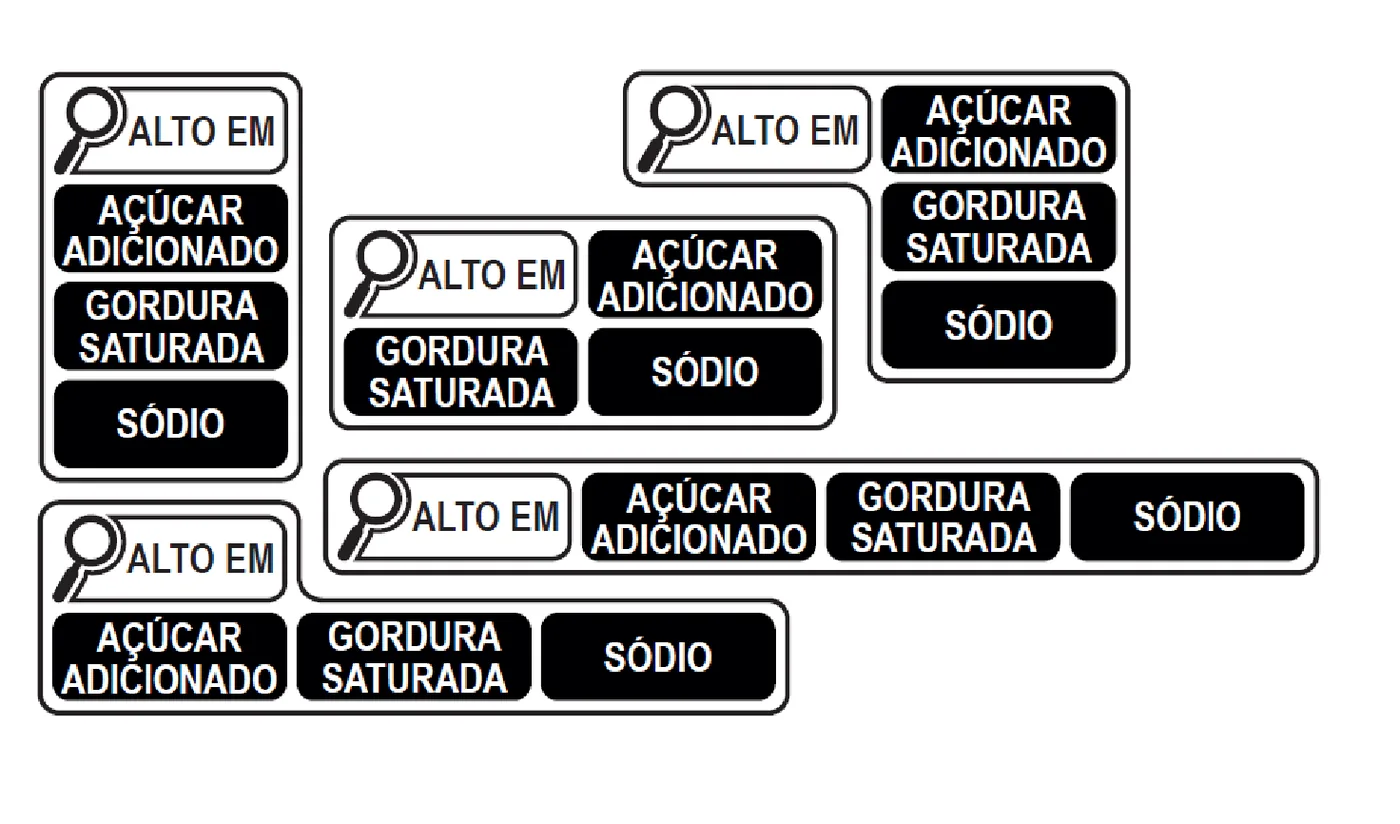
For products subject to this requirement, ANVISA mandates front-of-pack nutrition labeling, a magnifying-glass symbol with the words “ALTO EM” (high in), when a food reaches any threshold in Annex XV of IN 75/2020:
| Nutrient | Solid or semi-solid foods | Liquid foods |
|---|---|---|
| Added sugars | ≥ 15 g per 100 g | ≥ 7.5 g per 100 ml |
| Saturated fat | ≥ 6 g per 100 g | ≥ 3 g per 100 ml |
| Sodium | ≥ 600 mg per 100 g | ≥ 300 mg per 100 ml |
IN 75/2020 offers several magnifier models. You pick one based on the number of nutrients involved and the space available on the package.
The new nutrition information table
The nutrition table changes in both content and layout. It now includes:
- total sugars and added sugars;
- values per 100 g or 100 ml;
- the number of servings per package;
- black characters on a white background, in a readable location.
What it means for exporters
An imported food follows the same rules as a food made in Brazil. ANVISA’s food import manual states that imported foods offered to consumers must comply with RDC 727/2022 and the other labeling regulations. The mandatory information, including nutrition labeling, must appear in Portuguese.
If your original label is in another language, you apply a supplementary label in Portuguese. You can apply it in the country of origin or in Brazil, as long as it is done before the product is sold. With a non-compliant label, the import is cleared only with a health pending issue, and the importer remains responsible for the goods until the labeling is corrected.
Calculating the Brazilian declaration in beCPG
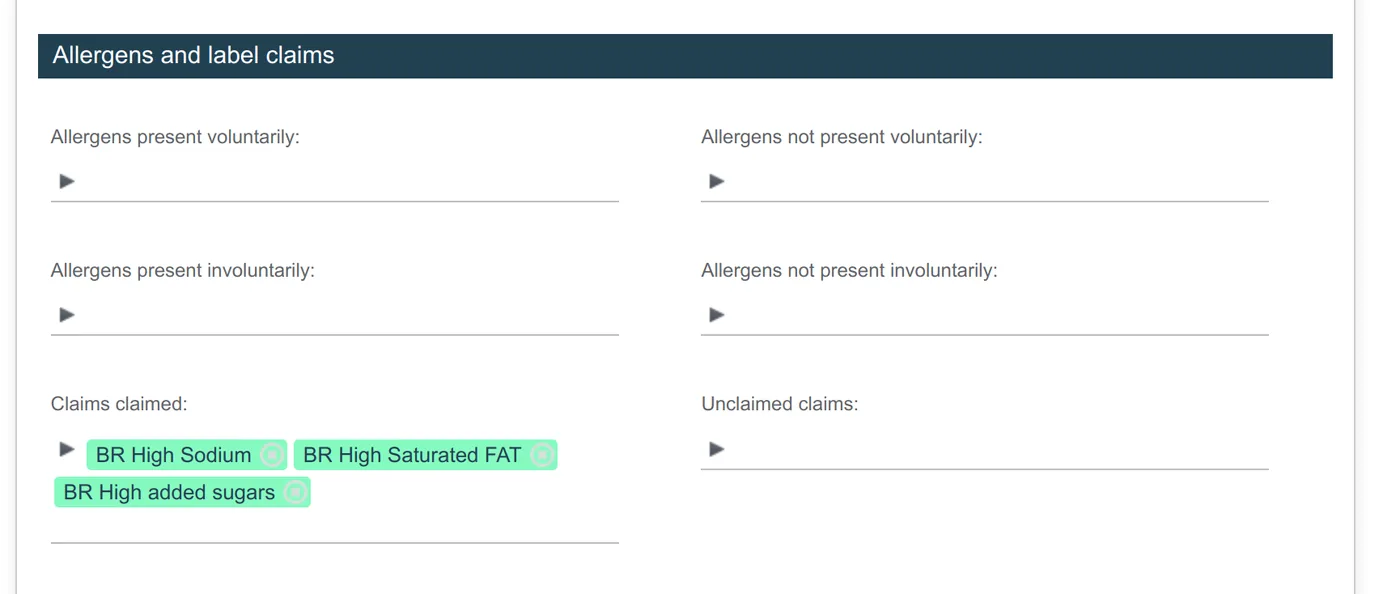
beCPG includes Brazilian regulations in the calculation of nutritional values, allergens, claims and ingredient lists. The Brazilian nutrition declaration has been updated, and new claims calculate the labeling data automatically. With beCPG, you identify:
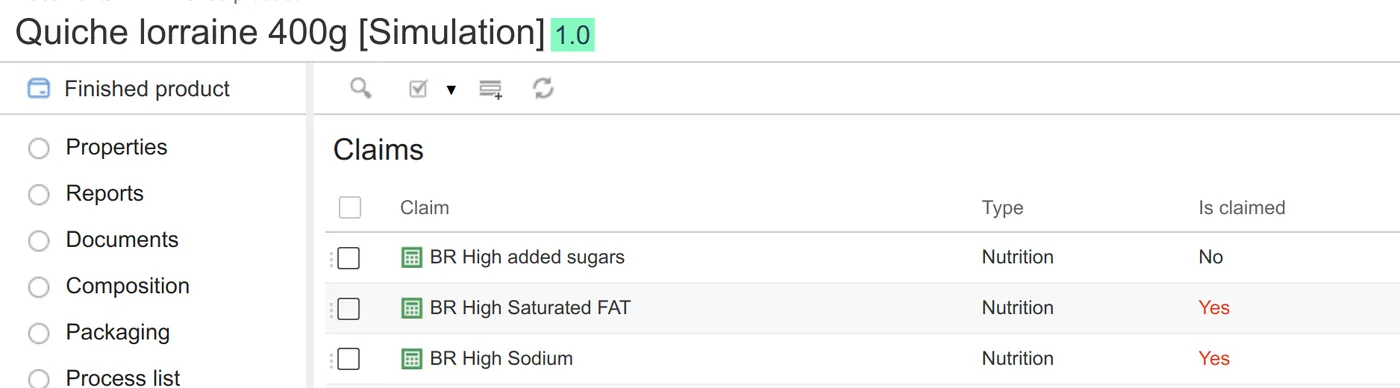
- products that exceed the regulatory thresholds, with advanced search;
- the front-of-pack labeling the product must carry, with automatic nutrition claims management.
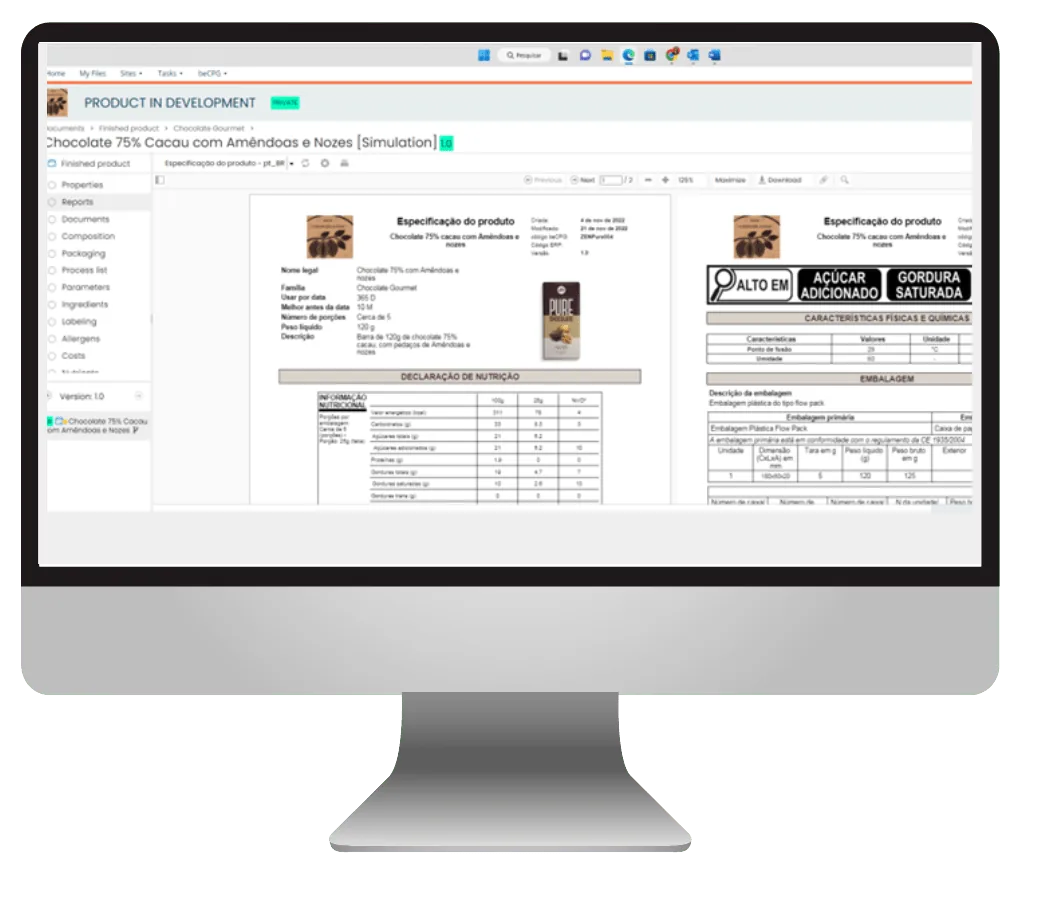
The new nutrition table format is available in beCPG and can be configured on your technical data sheets.
Selling in North America too? Read our guides to US Nutrition Facts and Canadian Nutrition Facts.
Nutrition labeling is no longer a last step: you calculate it from the recipe, during formulation. Request a demo or learn more about regulatory compliance in beCPG PLM.
Sources
- ANVISA: Rotulagem nutricional (RDC 429/2020 and IN 75/2020, thresholds, deadlines, table format), in Portuguese
- ANVISA: food import process manual, section 4.3 “Packaging and labeling of imported foods” (PDF, in Portuguese)
- Mérieux NutriSciences: Brazil, new rules for nutritional labeling
Frequently asked questions
When did Brazil’s new nutrition labeling become mandatory?
RDC 429/2020 and IN 75/2020 took effect on October 9, 2022. Products already on the market had 12 months to comply. Longer periods applied to family farming and to non-alcoholic beverages in returnable packaging.
Which nutrients trigger the “ALTO EM” magnifier?
Added sugars, saturated fat and sodium. The magnifier is required when a food reaches any threshold in Annex XV of IN 75/2020. Thresholds differ for solids (per 100 g) and liquids (per 100 ml).
Do these rules apply to food imported into Brazil?
Yes. Imported foods offered to consumers must meet Brazilian labeling regulations, with the mandatory information in Portuguese. A supplementary Portuguese label is allowed, applied before the product is sold.
What changes in the nutrition table?
The table declares total and added sugars, values per 100 g or 100 ml, and the number of servings per package. It is printed in black characters on a white background.
How does beCPG help apply these rules?
beCPG calculates the Brazilian nutrition declaration from the formulation and determines each product’s Brazilian “high in” claims. Advanced search finds the products that exceed the thresholds. The new table format can be configured on technical data sheets.