Food & Agro-industriesProduct portfolio
Managing food safety crisis with beCPG PLM software

Ethylene oxide contamination marked 2021 with an unprecedented food safety crisis. Ethylene oxide is a carcinogenic and mutagenic pesticide (identified as CMR) used for its action against micro-organisms (bacteria, fungi, etc.). Banned in the EU since 2011, it is still widely used outside Europe in spices and seeds treatment.
Initially detected in sesame seeds, the alert then spread to certain spices and even additives, leading to large withdrawal and recalls.
In the face of food safety alerts, beCPG accompany you:
- Enabling for a complete inventory of all the information needed for crisis management with product repository
- Optimizing your communication flows and processes with the project management tool
- Sharing key documents with your suppliers and customers
beCPG with its user-friendly design and tools, increases the speed and reliability of your research, improves your responsiveness and organization when dealing with food safety alerts, improves your communication with suppliers and customers
Perform an inventory with the multi-criteria search
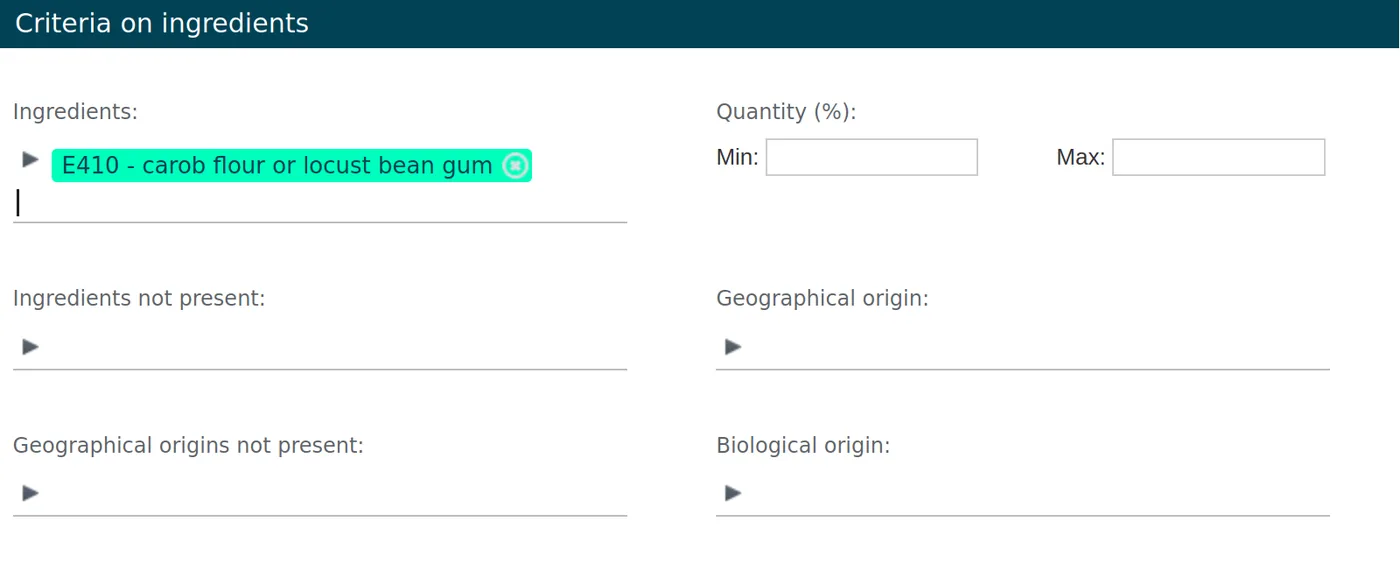
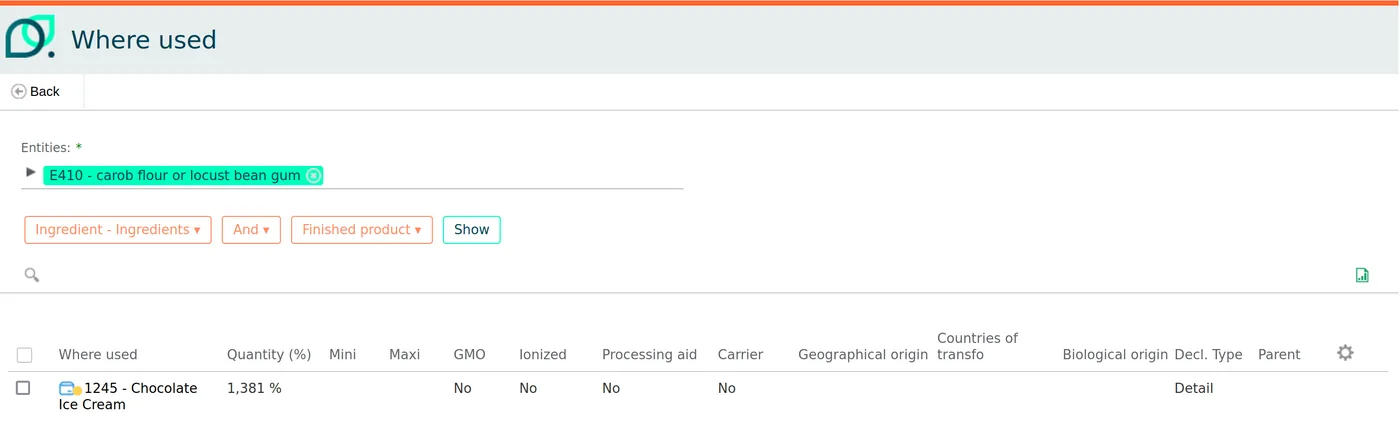
The use of the advanced search enables to easily find products using the ingredient. For example, using E410 (carob flour) as search criteria (stabilizer highlighted in the ethylene oxide crisis), gives us the list of all the products using it.
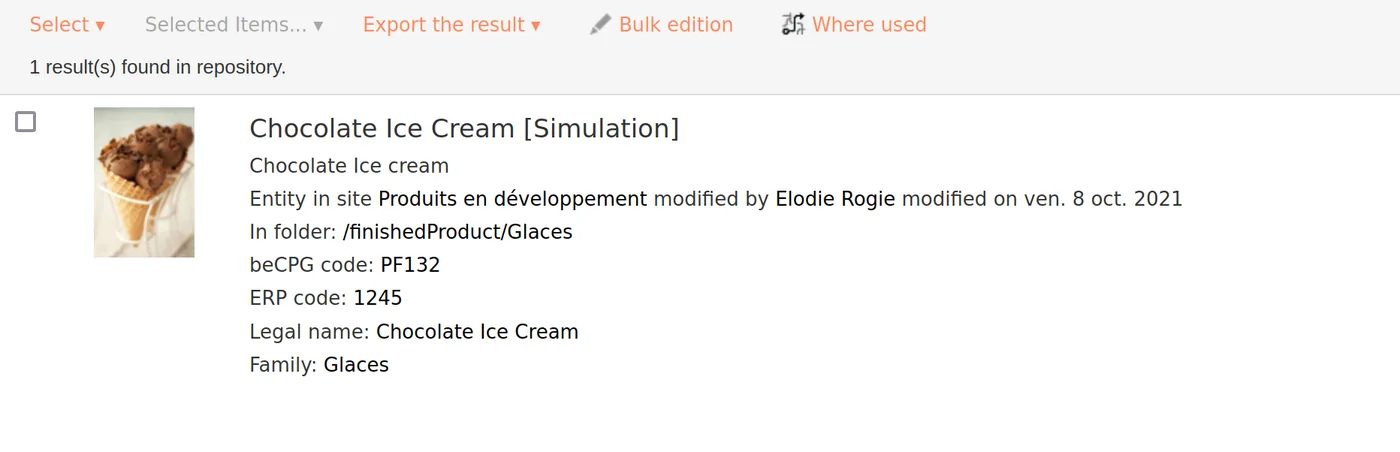
This search can be exported in Excel or PDF format. It’s also possible to make a “where use ” of the ingredient to find the products that use it:
Gain in speed and reliability!
Manage your food crisis management process
In order to pilot the crisis management linked to a food safety alert by setting up a project model.
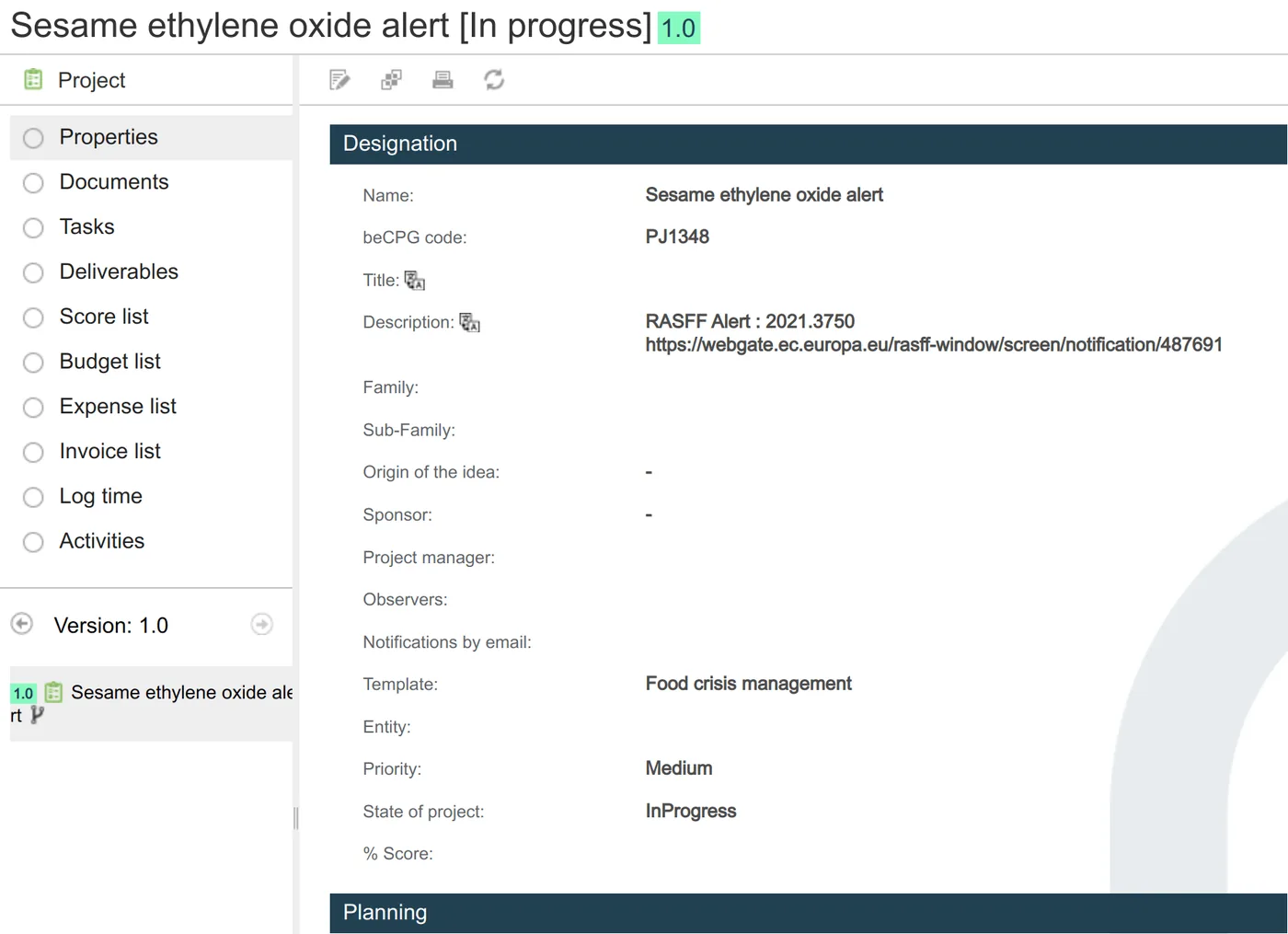
The model is “pre-configured” with basic tasks (inventory, supplier inquiries, etc.). These tasks can be assigned to employees who will be immediately notified by e-mail.
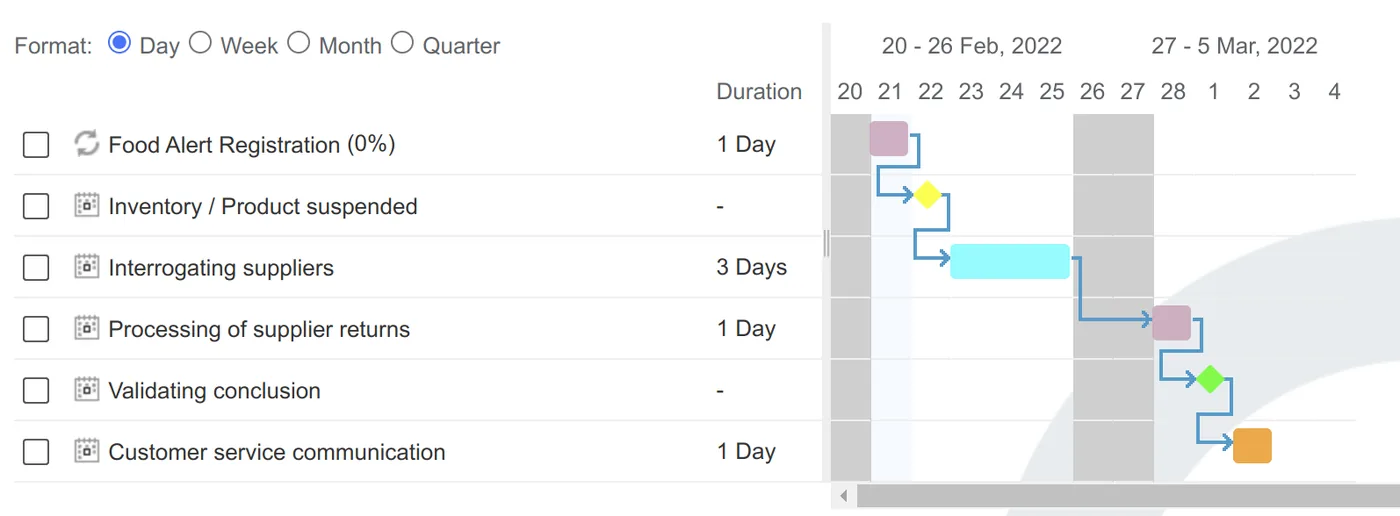
This module also allows :
- Send notifications of information from purchasing departments or customers. They will thus be able to follow the progress of the crisis;
- Link all documents (e-mail, certificates, photos, etc.);
- Link the “identified products”.
Improve your responsiveness and organization!
Make documents available internally, with customers and suppliers
It is possible to shared your knowledge by making product-related documents/certificates available. This way, your quality employees can consult the documents via the search or the product-related documents.
Improve your communication!
Read more about beCPG in our previous articles:
10 good reasons to choose beCPG’s PLM solution
Clean label formulation and product transparency
Source :
Le Monde – Many ice creams containing carcinogen targeted for recall (De nombreuses glaces contenant un produit cancérogène visées par une procédure de rappel)
Go further: discover product quality management in beCPG PLM.