Packaging and eco-design in your PLM
The same packaging data, requested three times
Purchasing, quality and your producer responsibility organization all ask you for the same packaging data, in three formats, twice a year. Then the regulations change.
beCPG keeps that data once. Describe your packaging, linked to the products that use it: materials, weights, recyclability and environmental scores are calculated from it.
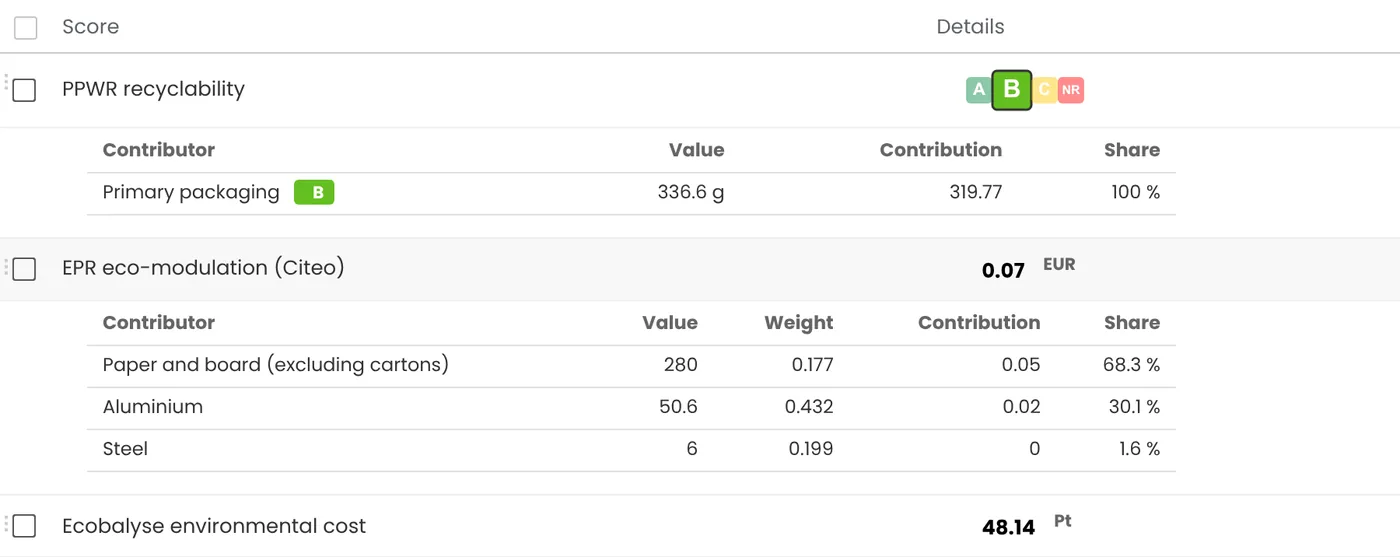 PPWR recyclability calculated from the packaging
Your packaging, structured once
- Packaging levels: primary, secondary and tertiary, with tare, gross weight, type and dimensions.
- Packaging kits and palletization: layers per pallet, cases per layer and per pallet, inherited by the finished product. The palletization plan appears on the production sheet.
- Multi-level packaging BOM, with components, supplier packaging, tare and calculated materials.
- Materials per finished product: weight by material and by category, with the geographical origin of the materials.
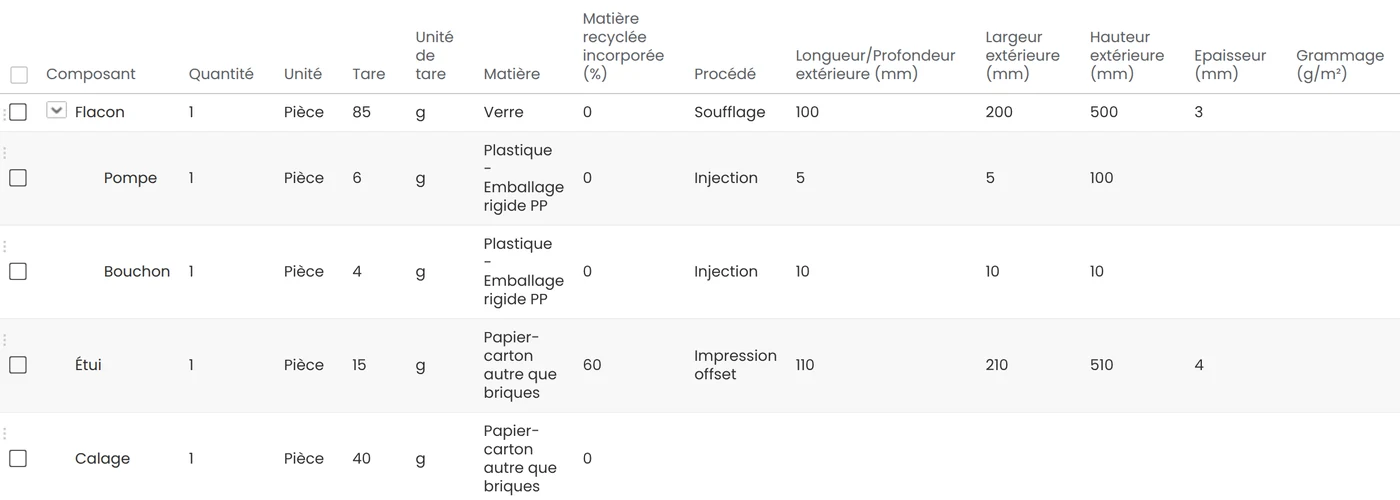 Recycled content, component by component

Calculated, not re-entered
Your packaging is linked to the products that use it. When a supplier changes the weight or material of a packaging item, beCPG lists every finished product affected, and the indicators are recalculated.
And the other way round: simulate a packaging change on a product before you commit, without touching the reference product.
PPWR and AGEC indicators
- PPWR recyclability: grade A, B, C or not recyclable, weighted by material and by packaging level, with its breakdown.
- Recycled content and recyclability rate calculated from the materials.
- Hazardous substances rolled up from the packaging, nested packaging included.
- AGEC: sorting information (Triman, Info-tri) and environmental claims kept with the product.
- One-click Citeo export for your annual household and commercial packaging declarations in France.

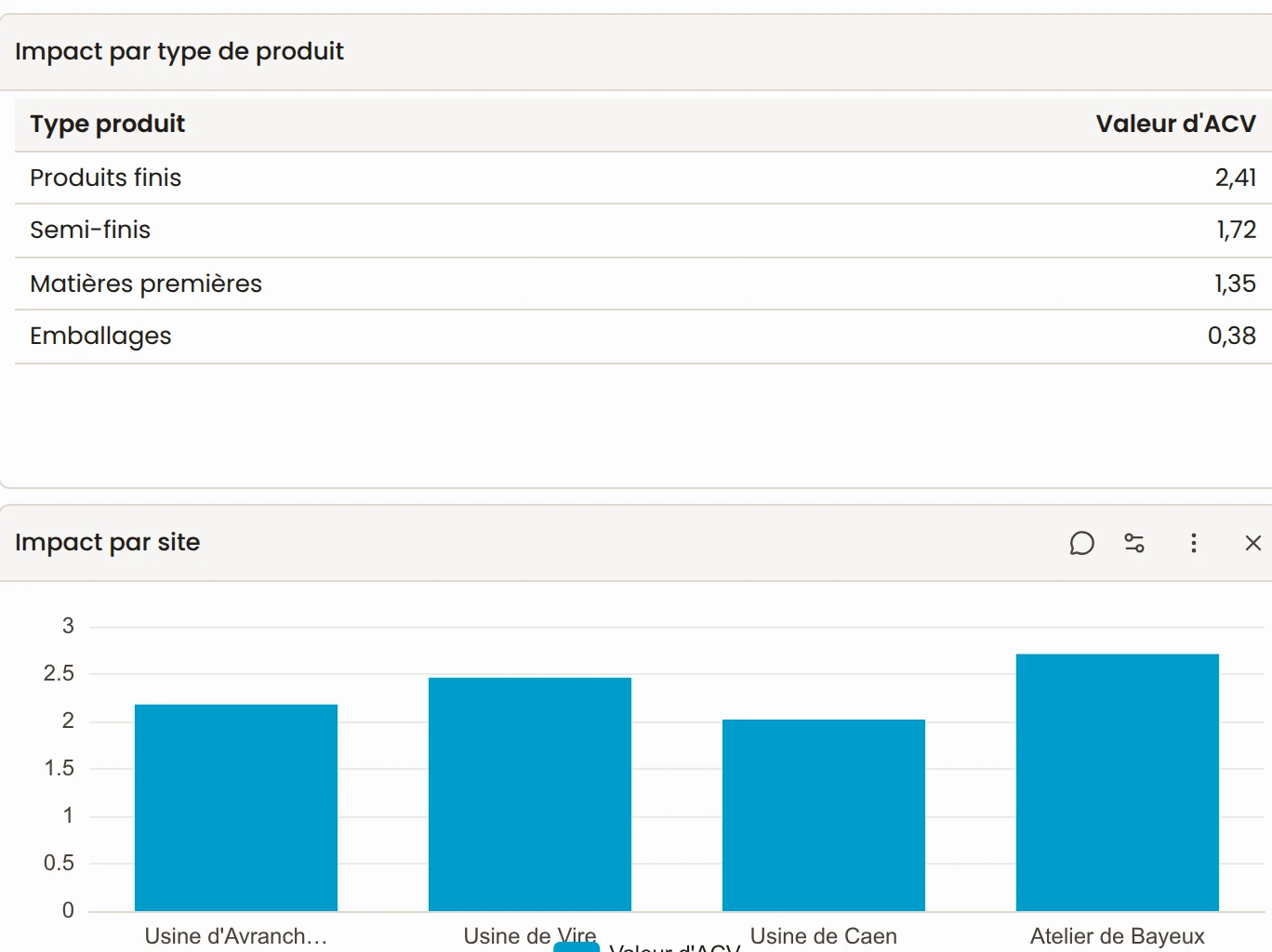 LCA value of packaging, alongside the other product types
Eco-design: the impact before you commit
- Product life cycle assessment: raw materials, recipe, packaging and processes, with your own indicators, such as climate change in CO2 equivalent.
- European PEF method for the environmental score, and import of ADEME’s Agribalyse data.
- Green-Score (formerly Eco-Score), Planet-Score and Ecobalyse for food, Green Impact Index for cosmetics, with the calculation breakdown.
- Environmental impact dashboard by product type, site or material origin.
Beyond declarations
Packaging sheets are generated from the same data, with your templates. The packaging BOM can be sent to SAP.
Artwork proofs are stored and versioned with the product, and Chef AI compares a proof with the specification before printing: the packaging you ship matches the data you declared.
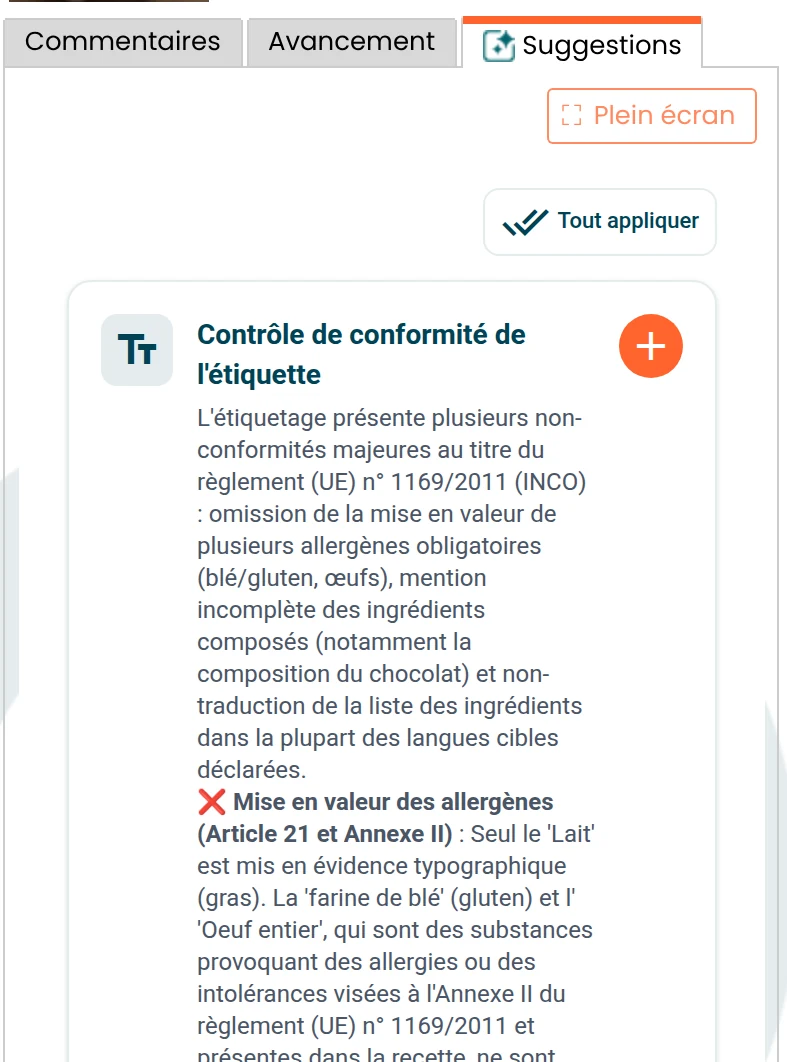 Proof compared with the product data
Why act now
The EU Packaging and Packaging Waste Regulation (PPWR), the French AGEC law and extended producer responsibility all require data that most manufacturers keep in spreadsheets, by plant and by customer. The hard part is not the declaration: it is having structured data when the deadline arrives.
They develop their products with beCPGSee all our customer references
















Does beCPG calculate PPWR recyclability?
Yes. beCPG calculates a recyclability grade (A, B, C or not recyclable) weighted by material and by packaging level, with its breakdown. A grade entered manually is kept.
Can beCPG prepare our Citeo declaration?
beCPG exports your products’ packaging data for the annual Citeo declarations, household and commercial: materials, weights and quantities per sales unit.
Which environmental scores are calculated?
Green-Score (formerly Eco-Score), Planet-Score, Ecobalyse and the Green Impact Index for cosmetics, as well as a life cycle assessment using the European PEF method, with Agribalyse data.
Is it suitable for cosmetic packaging?
Yes. Packaging levels, materials, recyclability and the Green Impact Index work the same way for cosmetics and personal care.
Bring one of your packaging items to the demo
We build its packaging levels and calculate its materials and recyclability live.