PLM software for bakery and pastry

Seasonal ranges, private label, and every allergen right

Seasonal ranges, private-label briefs, butter and cocoa prices that move, and an allergen list that must be right on every single pack.

beCPG is the PLM of bakery and pastry manufacturers such as Bridor, Délifrance, Aryzta, Jacquet Brossard, Mademoiselle Desserts and Boncolac.
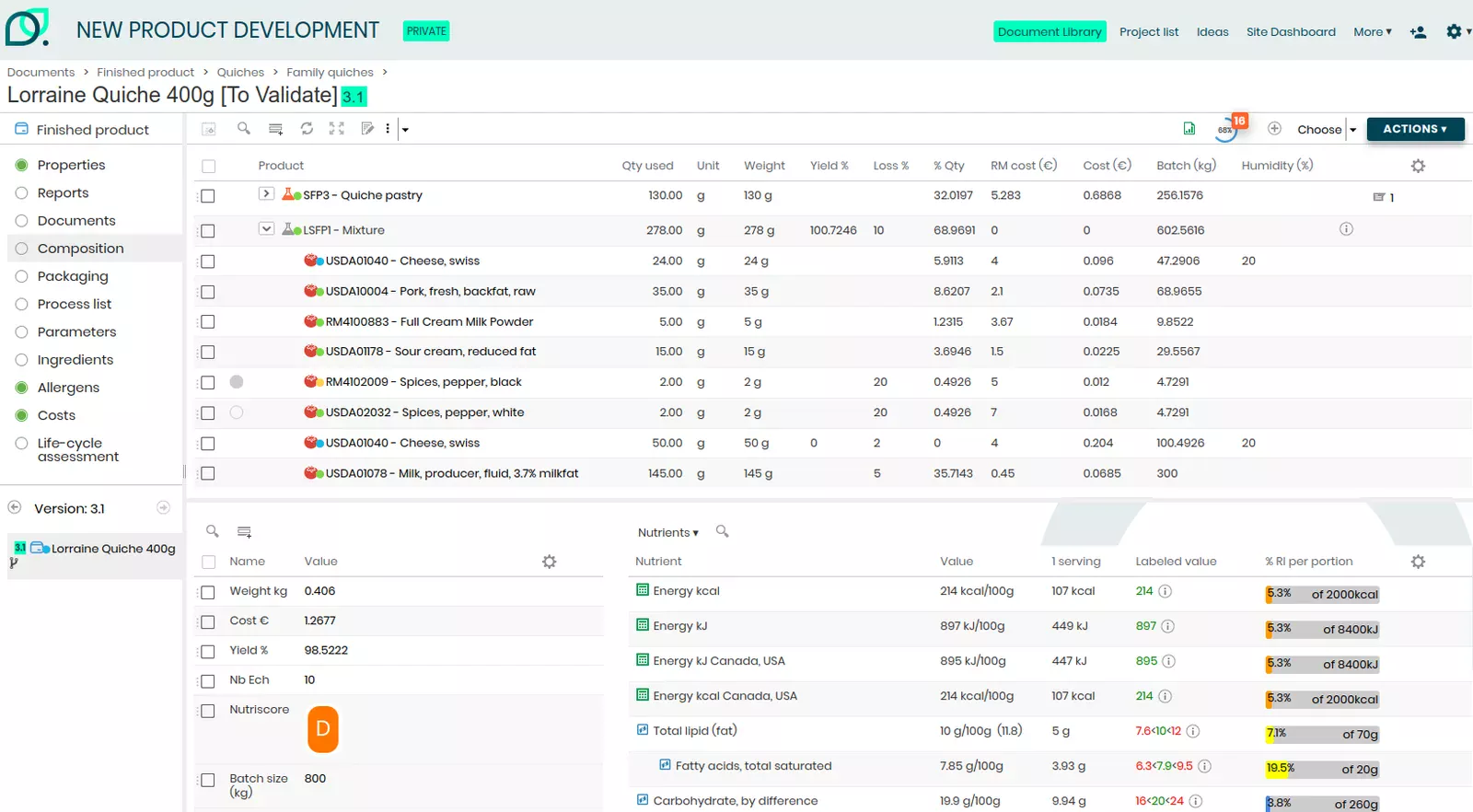

beCPG PLM: recipe composition with nutrition, costs and Nutri-Score

What it calculates on your recipes

  • Yields: the water lost during baking is applied through the recipe tree, so nutrition and ingredient percentages reflect the baked product. In 26.10, the label shows percentages after yield, evaporation included.
  • Process losses count in the cost, not in the nutrition. Overrun is taken into account too.
  • QUID and highlighted ingredients: chocolate, butter or fruit percentages in the ingredient list, with your own labeling rules, per customer if needed.
  • Allergens, intentional or from cross-contact, traced through every semi-finished product, with precautionary labeling action limits.
  • Nutri-Score, 2023 algorithm, and the 2017 one when you still need it.

Cost, and how to bring it down

Full cost by raw material, packaging and process, with fixed costs, transport, losses and your scenarios (this year, last year, next year), compared with a target selling price.

Optimization under constraints finds the cheapest recipe that still meets your nutritional and technical limits.

What it changes for private label

Each retailer has its own specification: forbidden ingredients, allergens, nutrients, claims. beCPG holds it next to the recipe and flags what does not comply before the sample goes out.

Technical data sheets are generated from the same data, in Excel, Word or PDF, with your templates and in the language of the market.

Change order in beCPG PLM: alerts simulated on bakery products before the change is applied

A new butter, every product checked

When a raw material changes, a change order lists every croissant, puff pastry or pain au chocolat that uses it, simulates the effect on each specification, then applies the change after approval.

  • Semi-finished products shared between ranges: doughs, creams, glazes.
  • Variants per plant and effective dates for a change that applies from a given day.
  • Trial orders for laboratory and industrial trials, with the batches used.
  • Production sheet with the palletization plan, for frozen and industrial bakery.
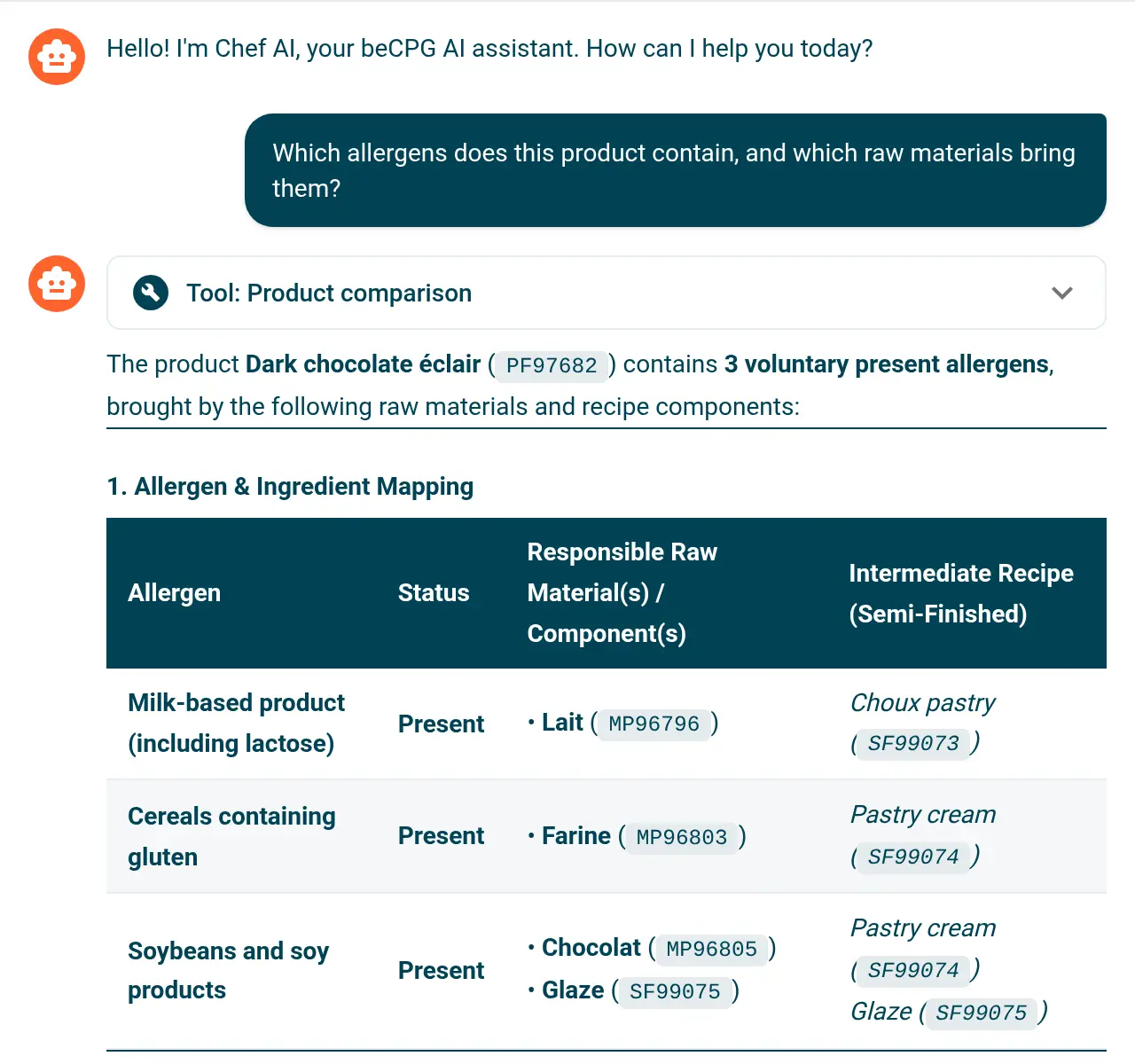
Chef AI answering which allergens a product contains and which raw materials bring them

AI that proposes, your experts validate

Ask Chef AI which allergens an éclair contains and which raw materials bring them, compare the Nutri-Score of two trials, or have a supplier data sheet read to pre-fill a raw material.

Every change it proposes waits for your approval. Nutrition, allergens and the ingredient list are always calculated by the beCPG engines.

Bakery and pastry PLM: frequently asked questions

How does beCPG handle baking loss?

The yield (water lost during baking) is applied through the recipe tree, so nutrition and ingredient percentages are those of the baked product. Process losses are counted in the cost only.

Can we use both Nutri-Score algorithms?

Yes. beCPG calculates the Nutri-Score with the 2023 algorithm, and the 2017 algorithm remains available.

Can beCPG produce private-label technical data sheets?

Yes. Customer specifications are checked against the recipe, and technical data sheets are generated from your templates, in the languages you need.

Does beCPG work for frozen and multi-plant bakery?

Yes. Semi-finished products, variants per plant, effective dates and change orders cover ranges produced in several plants.

Another question about your recipes? A food PLM expert answers you, with a demo on one of your products.

Bring one of your recipes to the demo

We formulate it live: yields, allergens, nutrition and cost.

beCPG
Privacy Overview

This website uses cookies so that we can provide you with the best user experience possible. Cookie information is stored in your browser and performs functions such as recognising you when you return to our website and helping our team to understand which sections of the website you find most interesting and useful.