Food & Agro-industriesCosmetics & HPCFormulationNew release
beCPG version 23.4: more collaboration, compliance and control
The new beCPG 23.4 version is here, bringing a host of innovations designed to make document management, compliance and collaboration even more efficient. The goal: simplify daily work, strengthen data security and save valuable time.
Toxicology and CLP classification: enhanced safety
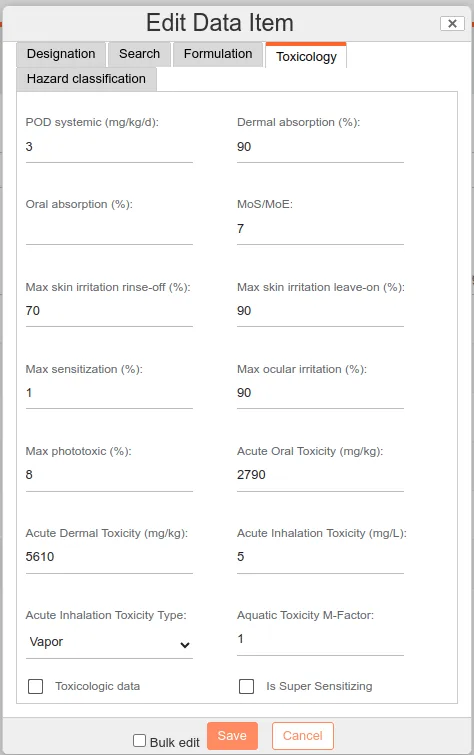
With this version, the Toxicology module now includes dedicated fields for calculating ingredient toxicity and hazard statements. Teams gain more reliable and complete data to secure formulations and meet regulatory requirements.
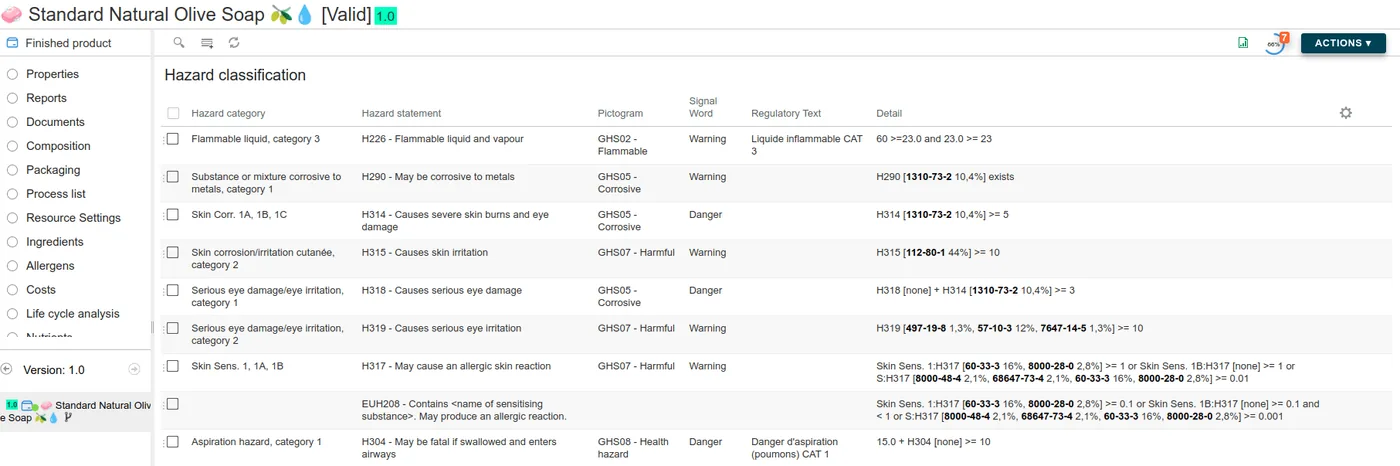
A new “Hazard classification” tab also makes its debut. It automatically generates the required CLP hazard statements and pictograms for labels and Safety Data Sheets (SDS).
Fewer errors, more automation.
Supplier portal: smoother collaboration
The Supplier Portal is now even more convenient for managing documents, questionnaires and supplier data in one place.
Key updates include:
- The ability to link multiple accounts to the same supplier directly from the contact list.
- Automatic deactivation of unused accounts when a supplier is archived.
- Read-only access to referenced entities in the home catalog, ensuring better visibility.
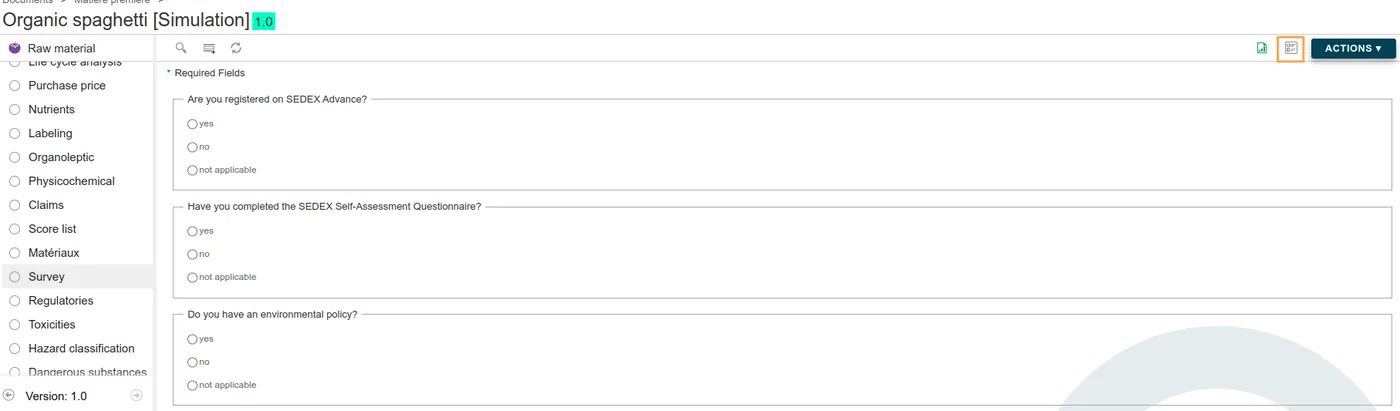
Questionnaires also get a refresh:
- a clearer, integrated design directly on entities,
- a read-only mode after validation to secure data,
- only relevant questions are included in scoring, with stricter control of response formats.
Example: if a supplier answers “No” to “Do you have a halal certificate?”, all related questions disappear automatically and do not affect the final score.
Evaluating suppliers, products and projects
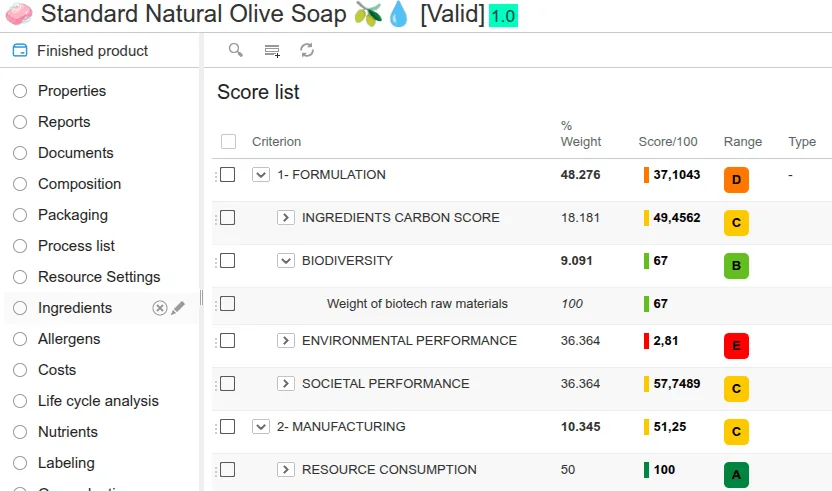
Version 23.4 introduces a new scoring system based on questionnaires. The responses provided automatically generate scores for suppliers, products or projects.
This approach simplifies evaluation and comparison while improving transparency in supplier relationships. It complements qualitative assessments with a clear and objective ranking system.
Green Impact Index calculation for cosmetics
Another major innovation: integration of the Green Impact Index (see: greenimpactindex.com)
Already used in the cosmetics industry, this index measures a product’s environmental and social impact. The system assigns a letter grade (A, B, C, D…) based on several criteria:
- Life Cycle Assessment (LCA)
- Physico-chemical data
- Environmental performance
- Costs
- Social aspects
The evaluation applies to finished products, raw materials or even suppliers.
Artwork module: real-time collaboration
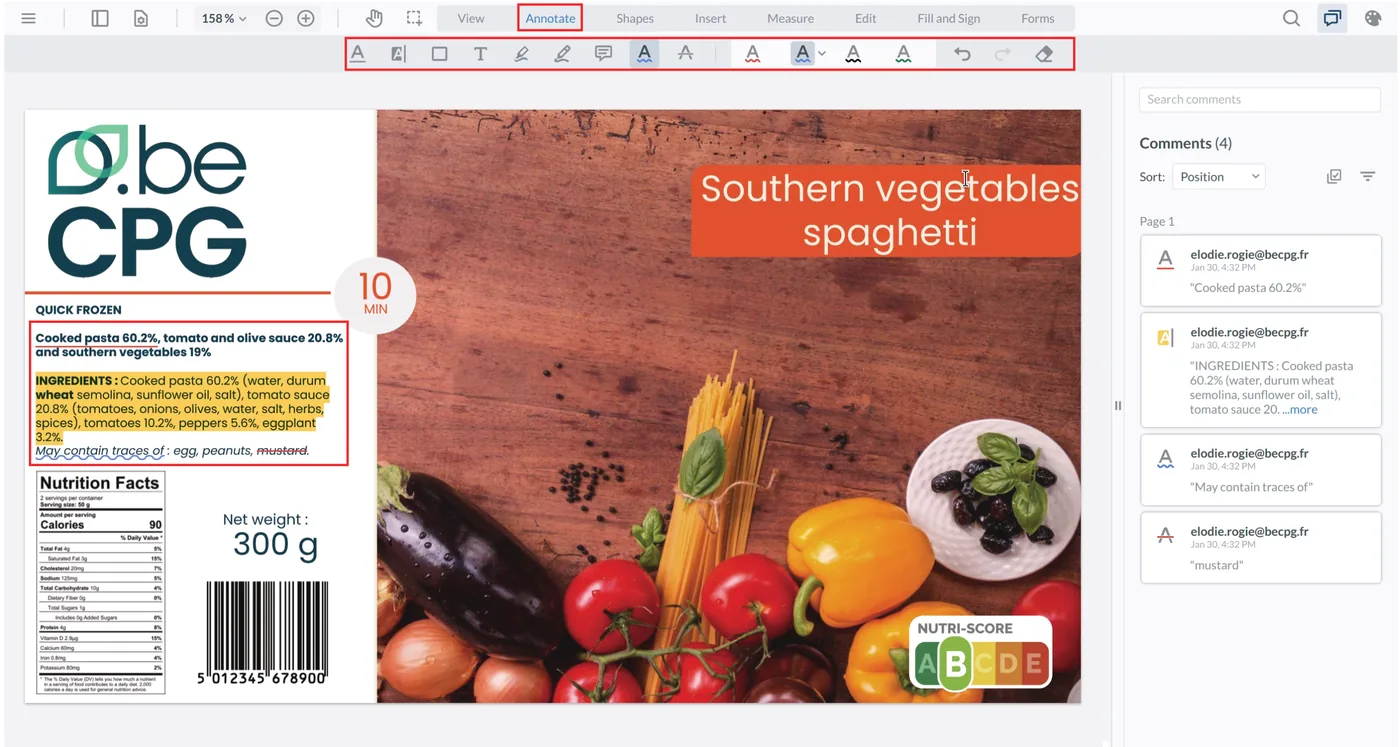
The Artwork module, designed to review and validate visuals (labels, packaging, etc.), is now even more collaborative. Several users can annotate the same document simultaneously, with comments displayed in real time. Endless back-and-forth between teams is now a thing of the past.
Label claims management: simplified with regulatory thresholds
A new “Regulatory threshold” field lets you automatically define when a Label claim becomes applicable.
Example: a cream can claim “hypoallergenic” only if certain substances stay below a predefined limit. No more complex manual calculations.
Document management: greater flexibility
Document management becomes more precise with the introduction of document types. Each type triggers automatic display of dynamic fields (mandatory or optional documents, expiration rules, etc.).
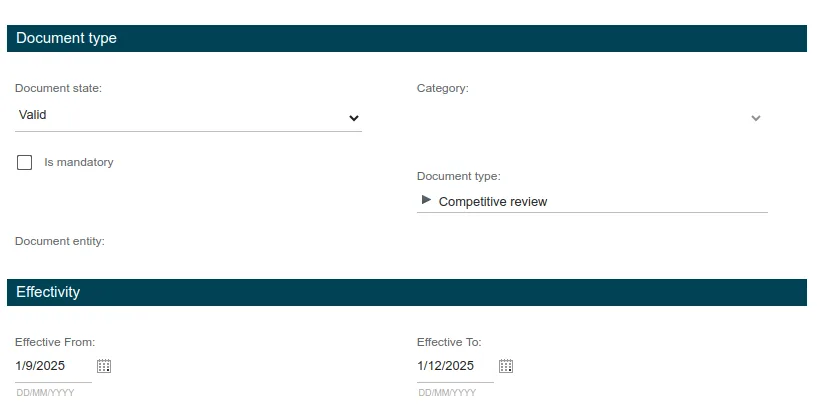
With advanced search and faceted filters, you can now easily refine content by:
- Expiration date
- Document type
- Document state
A simple way to quickly identify which documents need updating and avoid unpleasant surprises.
Other notable improvements
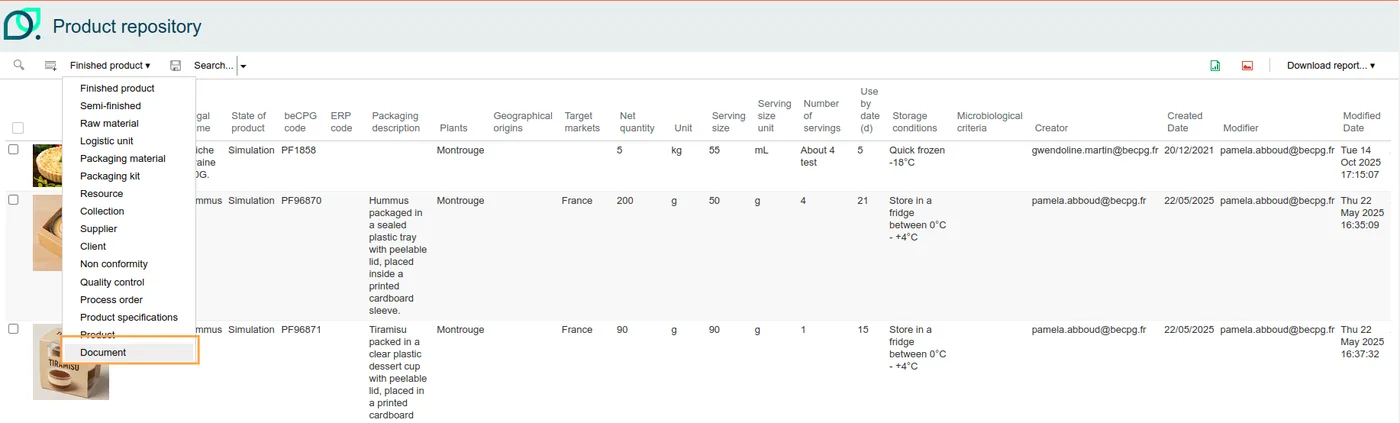
- Enhanced interface: scroll bars in long lists, refined icons, and photo thumbnails in the product repository.
- Citeo export: secondary packaging for food service is now included in the report for packaging taxes based on Citeo (see our blog: The beCPG PLM simplifies your Citeo packaging declaration).
- Task replies by email: respond directly from your inbox to save time.
- Specifications: ability to set target values for nutrients at different quantities.
- Stronger security: certain sensitive actions now require re-authentication.
- Improved GS1 connector: new attributes for better integration.
In summary
beCPG 23.4 simplifies daily work, strengthens compliance and improves collaboration, while paving the way for more sustainable and efficient product management.
Contact us today to discover version 23.4 in action!