Food & Agro-industriesFormulationQuality
How to choose food PLM software: 10 criteria

Choosing food PLM software takes more than comparing feature lists. Several criteria matter, depending on your business: formulation, nutrition calculation, allergen management, regulatory compliance, supplier collaboration and more. How do you compare vendors and find the one that fits your organization? Here are ten criteria to review.
Ten criteria to compare food PLM software
1. Multi-level recipe formulation with yields and losses
Check that a recipe can include sub-recipes (semi-finished products) on several levels, and that yields, process losses and moisture loss during cooking feed the calculations.
Question to ask: Enter one of our recipes with a sub-recipe and a cooking loss, then show the finished weight and the cost.
2. Nutrition and labeling calculated for each market
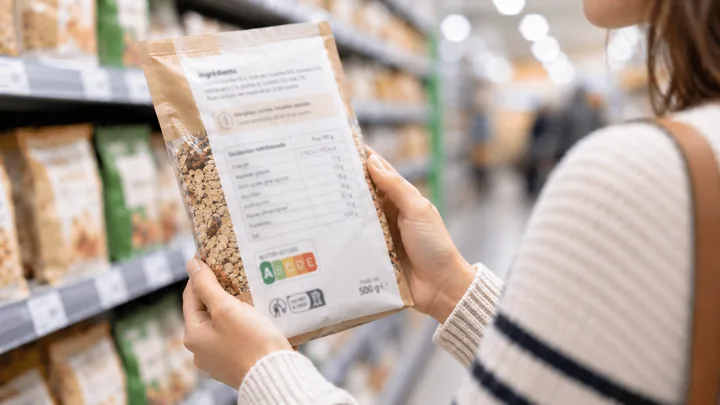
The nutrition panel and ingredient statement should come from the recipe, in each market’s format: the Nutrition Facts label under 21 CFR 101.9 in the United States, the bilingual Nutrition Facts table in Canada, and the nutrition declaration of Regulation (EU) No 1169/2011 for Europe.
Question to ask: Generate the US and EU panels for the same product, then change one quantity.
3. Allergens, including cross-contact
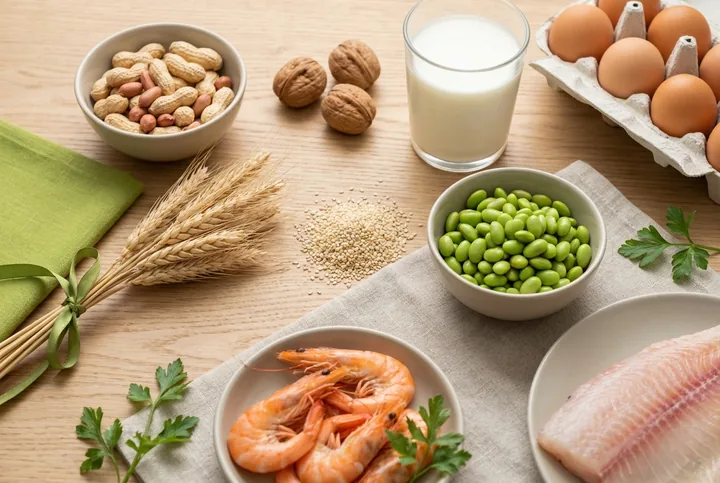
Allergens must roll up from raw materials to the finished product. In the US, that means the nine major food allergens, sesame included since January 1, 2023. The software should also separate allergens that are ingredients from cross-contact on a line or a site.
Question to ask: Where does this allergen come from, and how do you handle cross-contact on a production line?
4. Specifications and customer spec sheets
Retailers and customers can set specific requirements for product composition, characteristics or labeling. The PLM should check these requirements while you formulate and generate the spec sheet in the customer’s template.
Question to ask: What happens when a recipe no longer meets a customer requirement?
5. Regulatory lists by country and by use
An additive permitted in one food category can be prohibited in another, or in another country. Exporters need the check for every target market.
Question to ask: Who maintains the regulatory lists, which countries do they cover today, and can we see the regulatory references attached to each result?
6. Packaging data and EU PPWR
The software should centralize packaging data (materials, weights, composition, recyclability) and use it to meet the different regulatory requirements. If you ship to Europe, that includes the EU Packaging and Packaging Waste Regulation (EU) 2025/40, which has applied since August 12, 2026, as well as national rules such as extended producer responsibility (EPR) reporting.
Question to ask: Show the packaging bill of materials of a finished product and its recyclability calculation.
7. Supplier portal
A portal avoids retyping supplier spec sheets and tracks certificate expiry dates.
Question to ask: How does a supplier answer a questionnaire, and what happens when a certificate expires?
8. NPD projects and workflows
Check that projects, tasks and approvals live in the same tool as the product data.
Question to ask: Show a typical project, from the marketing brief to customer approval.
9. Integration with ERP, GS1 and other systems
The approved recipe should flow to the ERP without retyping, and product data to GS1 catalogs.
Question to ask: Which connectors ship as standard, and is the API publicly documented?
10. Deployment, data ownership and total cost
Compare cloud and self-hosted options, hosting location, full data export and the license model. Ask for a five-year cost (licenses, implementation, support) and a timeline to go live on a first scope.
Question to ask: Can we export all of our data, in which format, and what is included in the quoted price?
Summary table
| Criterion | Why it matters | Question to ask |
|---|---|---|
| Multi-level formulation | Accurate cost and yield | Show a recipe with a sub-recipe and a cooking loss. |
| Nutrition and labeling | One compliant label per market | Generate the US and EU panels for the same product. |
| Allergens | Consumer safety, recalls | Where does this allergen come from, and cross-contact? |
| Customer specifications | Retailer and brand owner requirements | What happens when a requirement is missed? |
| Regulatory lists | Market access | Who maintains them, and for which countries? |
| Packaging and PPWR | EU and national obligations | Show the recyclability of a finished product. |
| Supplier portal | Reliable data, no retyping | What happens when a certificate expires? |
| Projects and workflows | Time to market | Show a project end to end. |
| Integration | No double entry | Which standard connectors, which API? |
| Deployment and cost | Independence and budget | What is in the price, and can we export our data? |
How beCPG meets these criteria
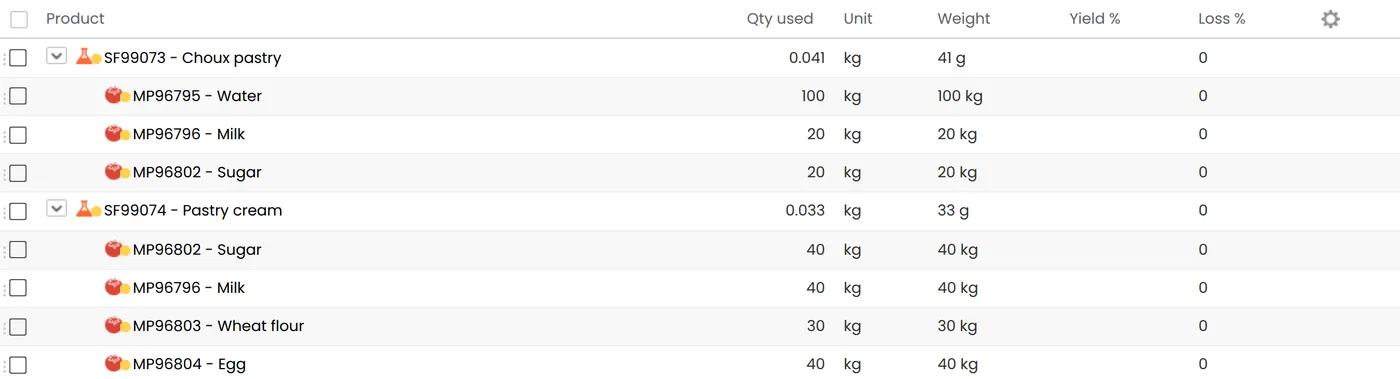
beCPG is open source PLM software for food and cosmetics, developed since 2010. Its formulation module handles multi-level recipes with sub-recipes, yields, losses, overrun and moisture. It calculates costs, nutrients, allergens, the ingredient statement and claims. Nutrition panels are generated in the official FDA, Health Canada and EU formats. Allergens distinguish voluntary presence from cross-contact.
Customer specifications are checked during formulation, and spec sheets are generated in the recipient’s language. The regulatory view gives a result by country and by use, with the regulation behind it. Packaging carries the PPWR recyclability grade. The supplier portal, projects and workflows run on the same platform.
For integration, beCPG provides a REST API, an SAP connector, a GS1 GDSN connector and a configurable CSV connector. It runs as SaaS hosted in the United States or in Europe, or on your own servers. Its community edition is released under the GNU LGPL v3 license. Start a 30-day free trial, or request a demo on your own products.
Sources
- 21 CFR 101.9, Nutrition labeling of food
- FDA, Food Allergies: What You Need to Know
- Health Canada, Nutrition facts tables
- Regulation (EU) No 1169/2011 on the provision of food information to consumers
- Regulation (EU) 2025/40 on packaging and packaging waste
Frequently asked questions
When does a food company need PLM software?
When spreadsheets can no longer tell you which products a change affects. That usually happens beyond a few dozen recipes, or as soon as you sell under several brands, to private label customers or in several countries.
What is the difference between food PLM and ERP?
PLM defines the product: recipe, specifications, labeling, packaging and versions. ERP executes: purchasing, inventory, production orders and sales. The two exchange the approved recipe and costs. See PLM vs ERP: who owns which product data?
How long does it take to go live?
It depends on the scope and the quality of your data. Start with one product line and its labels, then expand, and ask every vendor for a costed timeline.
Should food PLM be cloud or self-hosted?
Cloud removes infrastructure and upgrade work. Self-hosting suits companies that require internal hosting. In both cases, check that you can export all of your data. Learn more on our PLM software for the food industry page.