Cosmetics & HPCFood & Agro-industriesFormulationTechnical data sheets
Automatic generation of data sheets in beCPG
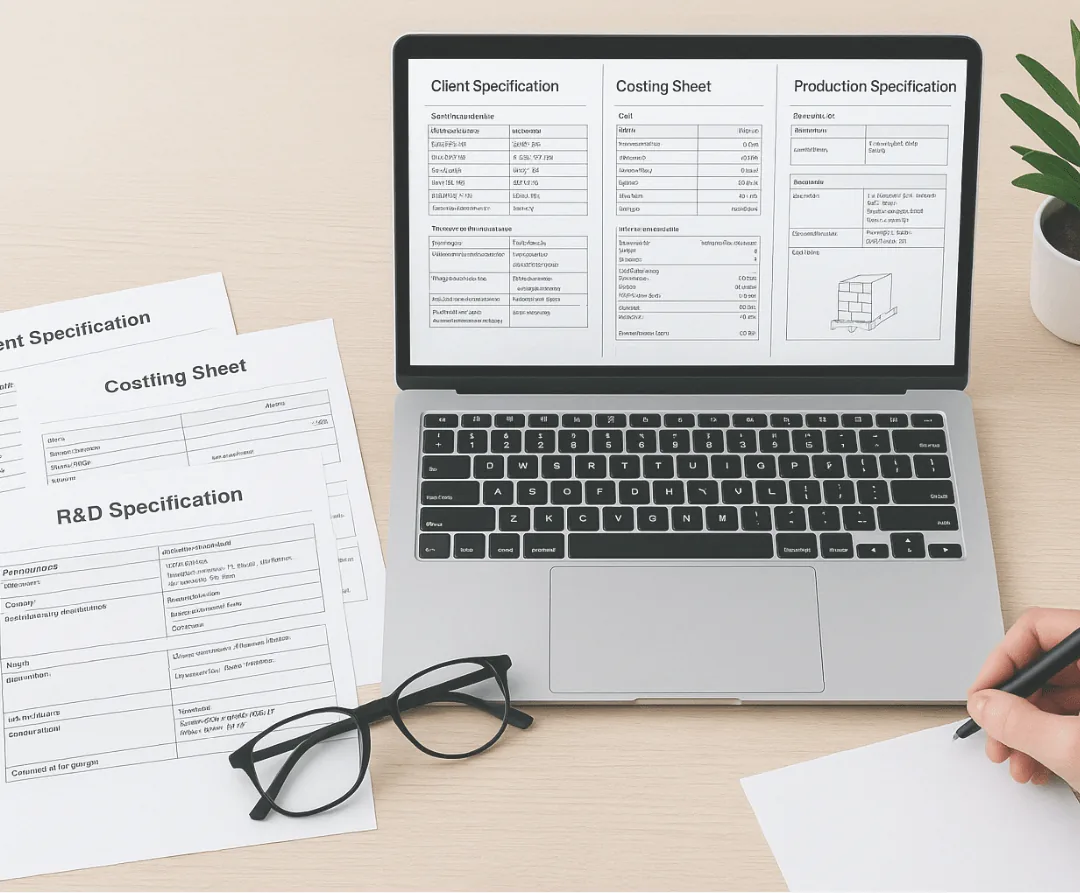
Technical data sheets play a crucial role in product management. They are essential for guiding production and development, and for ensuring clear communication with customers and regulatory authorities. However, creating them is often still a manual and time-consuming task.
With beCPG, it is possible to automatically generate all types of technical data sheets using centralized data within the PLM.
Centralized data in the PLM
In beCPG, all product data can be entered: formulation, allergens, composition, weight, labeling, nutritional values, manufacturing process, costs, packaging, certifications, claims, and more.
This data is then automatically used to populate various product sheet templates, helping to eliminate manual errors.
A technical sheet for every need
beCPG offers various types of technical sheets and allows them to be generated in multiple languages, depending on the target markets. The text is automatically translated based on the selected language.
At the same time, each company can customize the format of their sheets: logo, branding, document structure, etc. Sheets can also be exported in several formats, including PDF, Word, and Excel. This allows companies to produce professional, easily shareable documents that can still be edited if needed. For example, to add comments, annotate a version, or include client feedback.
Customer sheets to meet specifications
The customer sheet summarizes all the information necessary for product commercialization. It includes key compliance elements such as the legal name, net weight, shelf life, nutritional values, allergens, microbiological characteristics, origin of raw materials, labeling, production site certifications, and storage and usage conditions.
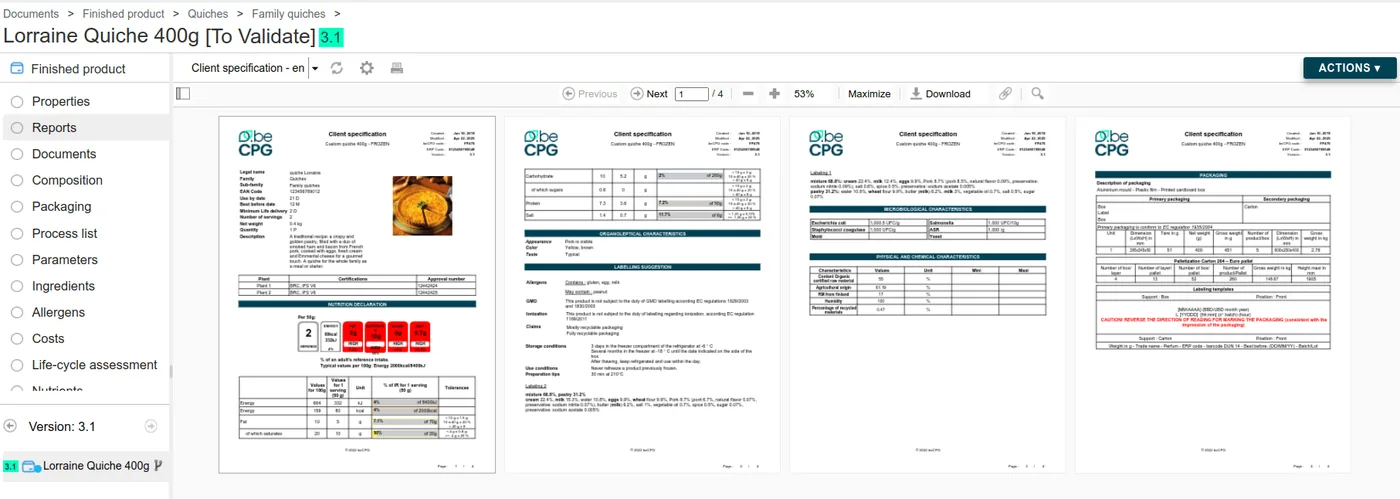
It is also tailored to local requirements through the system’s multilingual capabilities. When a sheet is generated in a specific language, beCPG automatically applies the rules associated with the target country.
For example, nutritional values are rounded according to tolerance thresholds defined by local regulations, and the format of the nutritional table adapts (e.g., “Nutrition Facts” in the U.S.). See our blog: Nutritional Values: From Formulation to Labeling.
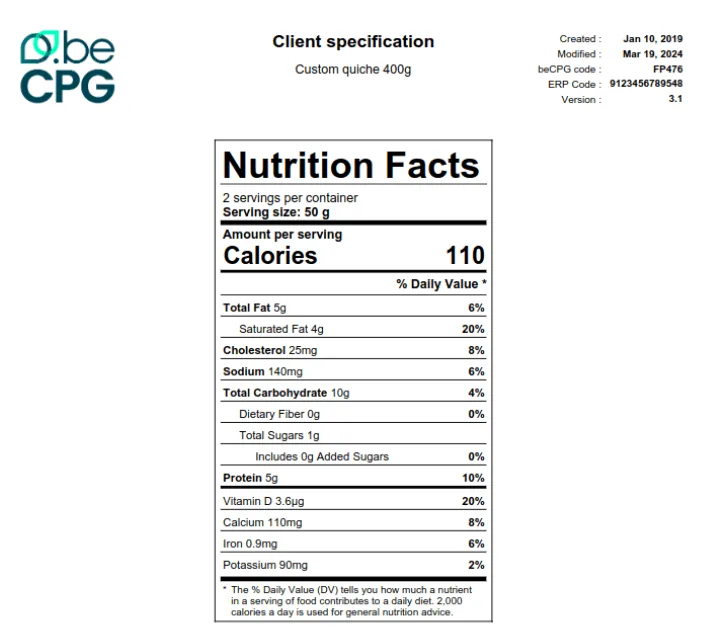
Regarding allergens, beCPG takes national regulatory lists into account.
See our blog: Allergen control for an optimal food security.
This sheet is essential for meeting distributor requirements and is often mandatory for market approval. With beCPG, it can be generated and kept up to date automatically as soon as any data is modified.
R&D sheets to drive innovation
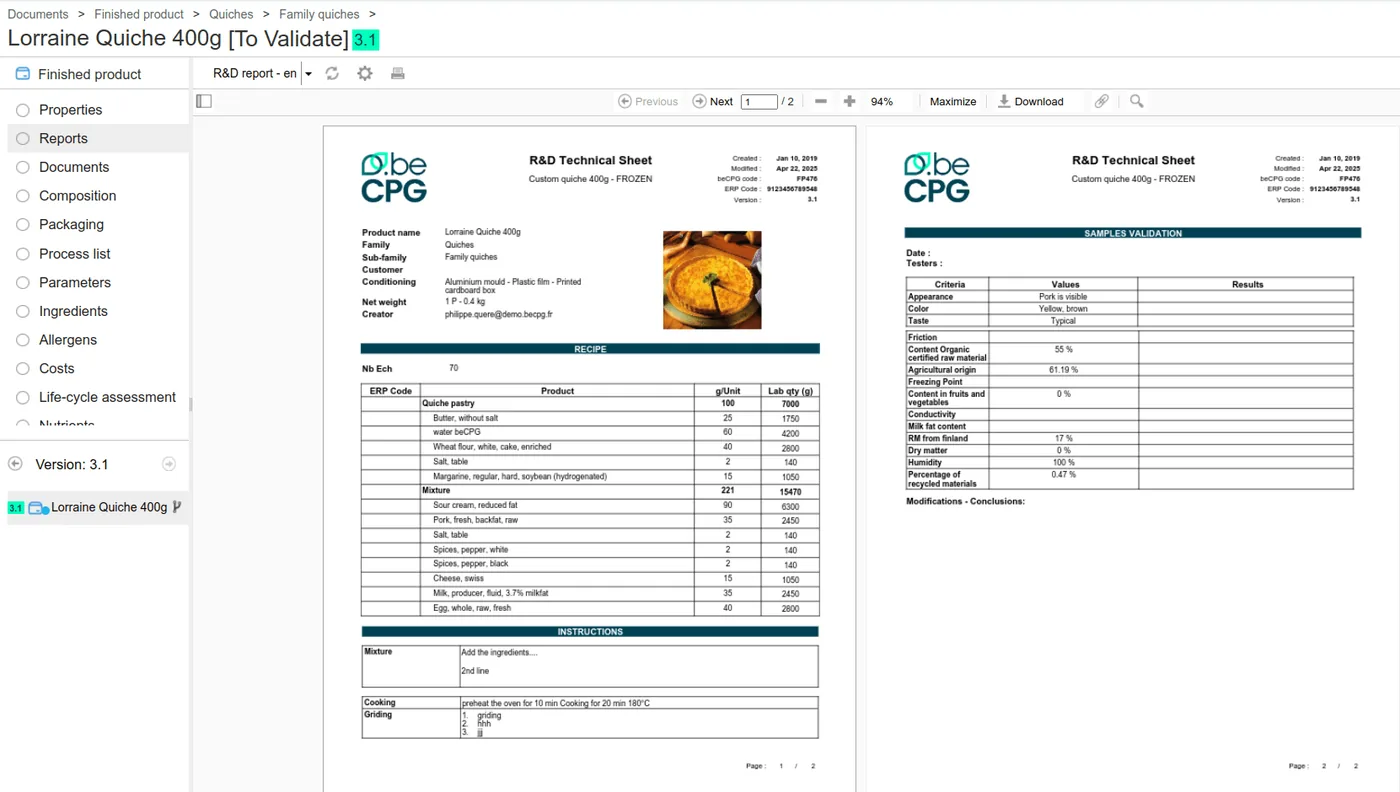
The R&D sheet serves as a working document for formulation teams. It contains the recipe and precise quantities, manufacturing instructions, lab-scale dosages, and more. It also includes validation elements such as sensory observations and serves as a foundation for industrialization.
Cost sheets to manage profitability
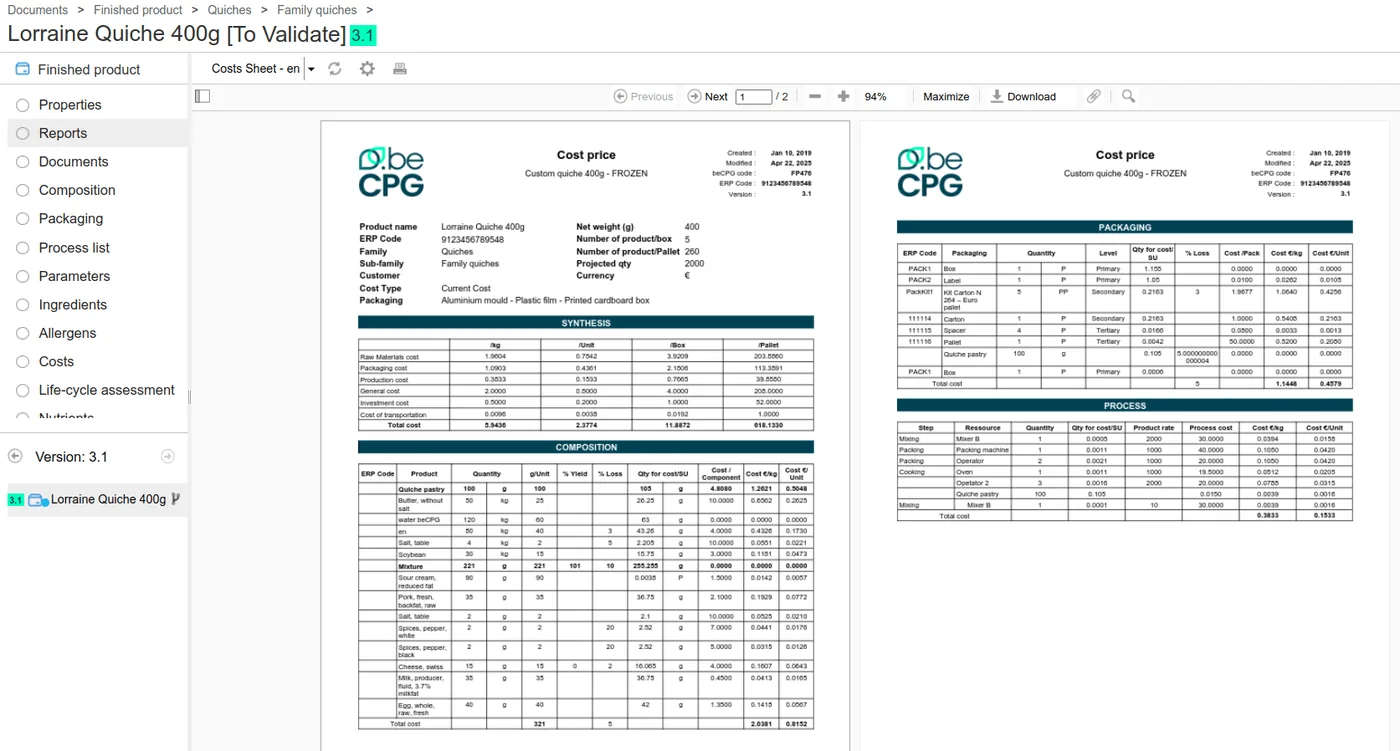
The cost sheet provides a structured overview of all product-related expenses. It details every cost: raw materials, packaging, processing, labor, energy, and storage. Each cost category can be analyzed individually with precise detail for each component of the product: cost per raw material, unit cost per process operation, and cost of each packaging component.
This data is automatically calculated at different levels: per sales unit, per package, per kilogram, or per pallet. This enables profitability analysis. See our blog: Cost optimization and control with beCPG.
Production sheets to ensure standardization
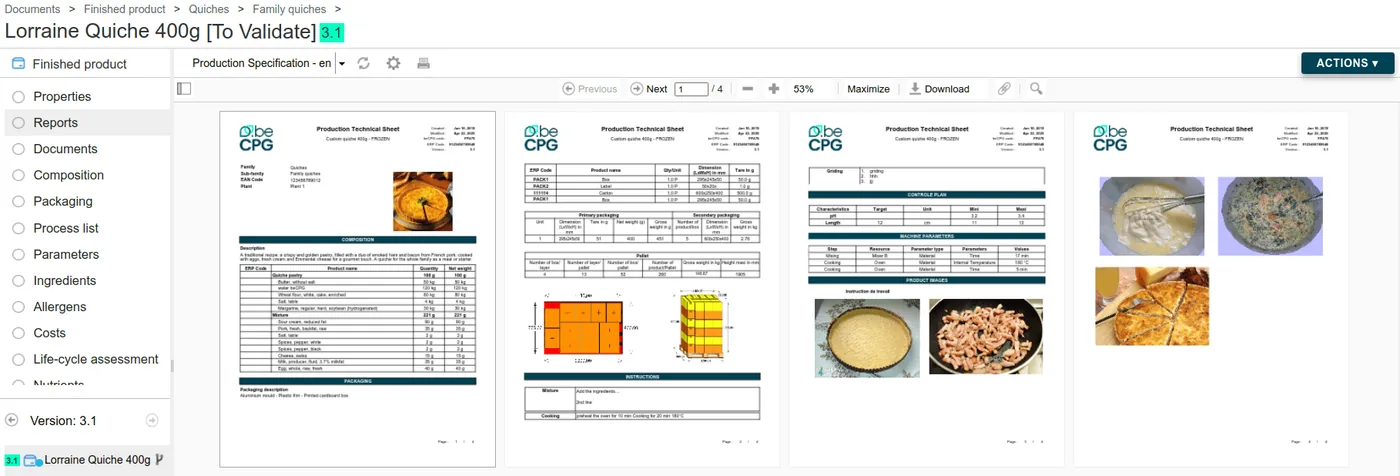
The production sheet is an operational document. It outlines the recipe to follow, step-by-step instructions, machine parameters (time, temperature, speed), and control criteria. Visuals can be included to facilitate execution.
It also contains logistical information such as dimensions, weight, palletization plans, and more.
Receiving data sheets rather than sending them? See how to use the content of supplier technical sheets received as PDFs.
Contact us today to request a demo or a free trial!